IRMPS - FINAL ESSAY TOPIC
by Tobin Albanese
Volume 1 Thu Mar 26 2026
This paper serves as a preliminary exploration of how energy dependence can shape political behavior within international alliances, particularly in the context of the European Union’s response to Russia. Rather than presenting a finalized argument, it outlines the research design, theoretical framework, and data approach that will guide my final analysis. By focusing on Russian energy exposure and its relationship to sanction alignment among EU member states, the project aims to investigate whether economic dependence functions as a measurable constraint on foreign policy decision-making.
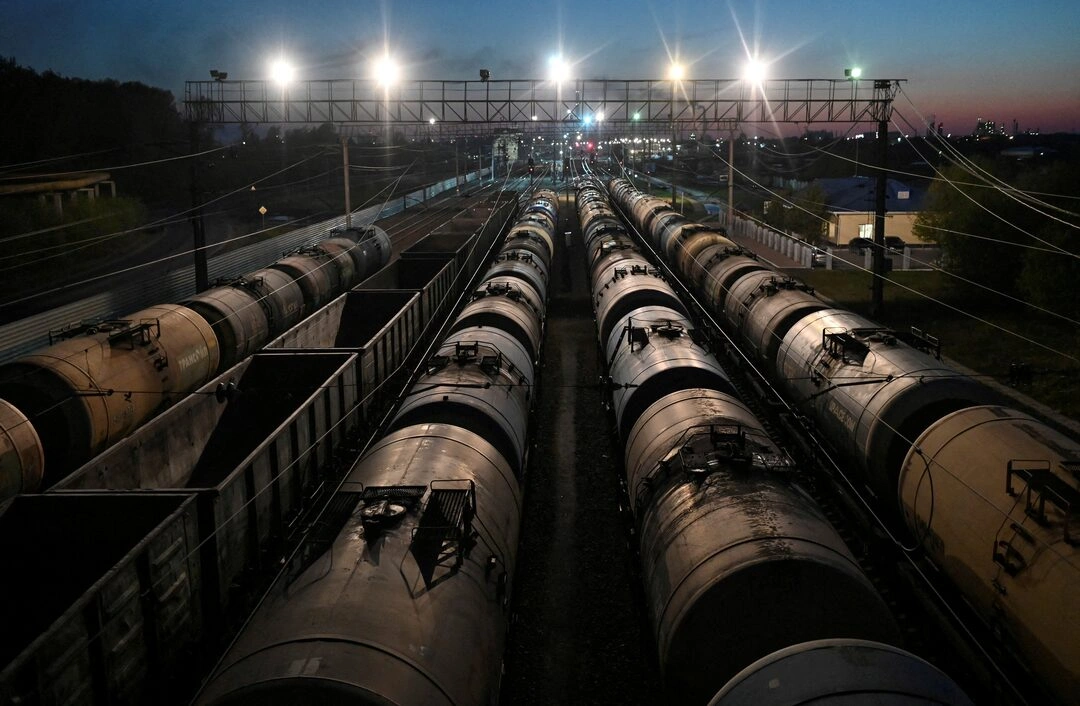
For my final research paper, I plan to write about how energy dependence can function as a political constraint within international alliances. More specifically, I plan to focus my topic on a quantitative analysis of Russian energy exposure and its relationship to the Eastern European member states’ alignment with ongoing sanctions against Russia following the post 2014 conflict and the current ongoing 2022 invasion between Russia and Ukraine. While the European Union has publicly emphasized a more unified response to Russian aggression, member states have differed in the scope of their sanction implementations. There must come a point where a state actor must focus more of their resources and efforts selfishly, rather than on the overall collective commitments of the European Union. Especially, with the ongoing conflict between America, Israel, and Iran. With Oil prices skyrocketing and the Strait of Hormuz being a main attack point for the Islamic Regime, we might see a change in attitude from EU states participating in the transaction of Russian oil trade (O’Carrol, 2026). So, my paper will discuss these differences and raise an empirical question: to what extent does economic dependence on Russian energy influence political decision-making among EU member states?
My paper will discuss multiple core political science theories. For example, Liberal interdependence theory suggests that economic ties reduce incentives for conflict because states receive higher costs when severing trade relationships. In the case of the European Union and Russia, many EU member states maintained significant energy ties with Russia before the 2022 invasion of Ukraine, meaning that reducing those ties and enforcing sanctions carries major economic instability in energy domestically. However, asymmetric interdependence theory argues that when dependence can become uneven, the more dependent states become politically constrained, or more likely to go against the shared views that EU members hold and focus primarily on their own country's needs and domestic economic stability. In the European context, what was previously framed as “mutual energy dependence” between Russia and Europe may have evolved into a more asymmetric vulnerability, especially for states that heavily relied on Russia’s pipeline infrastructure (Paillard, 2010; Tsakiris, 2014). Research on Russian oil export under sanctions demonstrates that Russia was able to reroute energy flows and sustain export revenues despite being sanctioned by Western states (Babina, 2026; Padoba, 2025). If Russia can partially offset sanction costs while dependent European states face immediate domestic issues, this imbalance may influence national political decision-making and reduce support for future or ongoing sanction policies. Additional research on global commodity restructuring after the Russia-Ukraine war further supports the argument that energy markets function as strategic instruments rather than neutral economic exchanges. (Zhang, 2025). With all this in mind, these papers suggest that energy exposure is not simply an economic statistic or byproduct. It may act as a pivotal structural constraint on foreign policy behavior within the European Union.
To test my theory, my research will be built on a cross-sectional dataset of EU member states. For what I have in mind so far, the independent variable will be Russia’s energy dependence, from the percentage of national oil and gas imports sourced from Russia prior to and post 2022. This data will be pulled from European energy import statistics and the UN Comtrade database. The dependent variable will be the political alignment against Russia, and I will be measuring this using the UN General Assembly voting scores with Russia from the Voeten UN voting dataset. Most likely, I will try to use Stata and compare multiple datasets to ensure my data isn’t messy, but these are the largest and current datasets being used for similar topics. There is a nicely done GitHub project as well with all the UN's general assembly votes from pre-2022, along with their idea-points directly cited from journals. All of this provides a quantifiable indicator of diplomatic alignment between Russia and the EU states. I might also compare data points from sanction alignments based on the timing and scope of national sanction implementations as well. I will try to include several control variables as well, like the World Bank’s GDP per capita, SIPRI’s military expenditure, and the V-Dem democracy score to account for economic capacity, regime type, and security exposures. Including these kinds of control values allows my analysis to isolate whether energy dependence independently predicts variation in political alignment, at least as one of my primary goals. From previous lectures, having strong control values will also come in handy throughout my research itself and the entirety of this research paper.
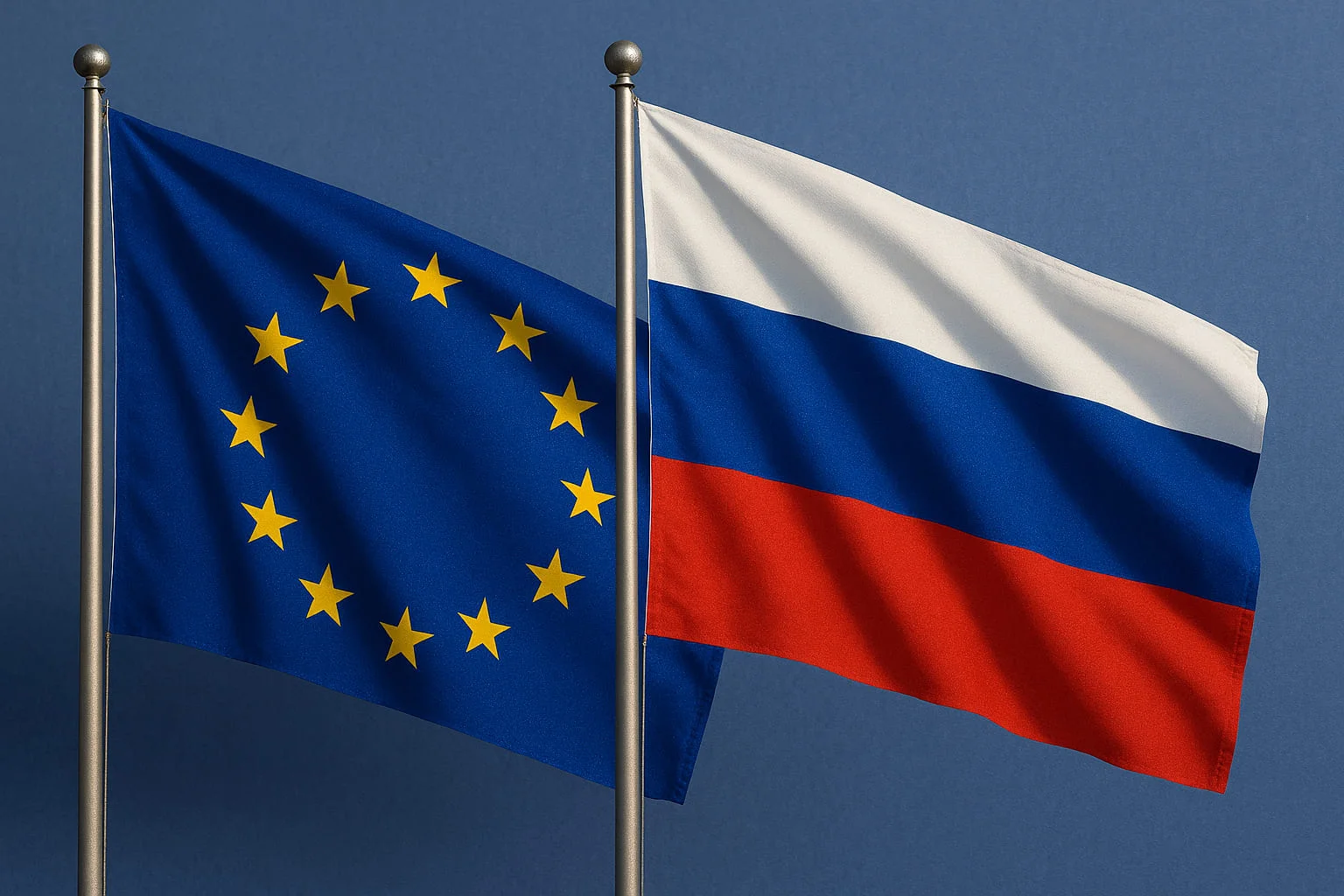
Ultimately, in this final paper, I hope to learn more about utilizing research methods to come up with political science theories and ideas, but also to apply research methods to examine whether economic dependence systematically influences political decision-making within the European Union. By focusing on how energy exposure affects sanction alignment, I hope to better understand how state actors respond to economic pressures under different geopolitical circumstances. Focusing specifically on how economic dependency interacts with the European Union’s collective policy structure, with a primary emphasis on Eastern European and Russia-related affairs.
Resources & Archival References
Academic Sources
- Russian oil exports under international sanctions
- How are EU and member states reacting to energy crisis triggered by Iran war?
- Russia and Europe’s Mutual Energy Dependence
- Structural Changes in Russian Crude Oil Exports
- Dependencies & Vulnerabilities: The Energy Parameters of the Evolving Crisis between Russia, the EU and Ukraine
- The dependency structure of international commodity and stock markets after the Russia-Ukraine war