MARKETS WITHOUT RULES
Informal Networks and the Failure of IMF Reform in Russia
by Tobin Albanese
Volume 1 Mon Jun 08 2026
This paper analyzes Russia’s post-Soviet transition as a case where market reform failed because it was introduced without the institutional foundations needed to support it. Rather than replacing informal networks, IMF-backed liberalization strengthened existing systems of personal access, elite power, and blat-based exchange.

The collapse of the Soviet Union in 1991 forced Russia into a rapid and unstable transition from a centrally planned economy to participation in the modern global capitalist system. This shift was heavily influenced by Western economic models and institutions. Particularly, the International Monetary Fund promoted policies centered primarily on liberalization, privatization, and market expansion. The main assumption behind these kinds of reforms was straightforward: once markets were introduced and state control was starting to be reduced, competition would increase, efficiency would improve, and formal institutions would develop over time.
However, Russia’s transition did not produce these outcomes. Instead of a functioning, rules-based market economy, the 1990s were marked by weak institutions, uneven enforcement, and the continued reliance on informal practices. Rather than disappearing under market conditions, informal networks remained central to how economic exchanges actually operated. This raises a key question within international political economy: why did neoliberal reforms fail to produce the institutional results they were designed to achieve in post-Soviet Russia? One explanation is that these reforms were implemented in a context where the institutional foundation needed to support them was weak, causing new market structures to operate alongside existing informal systems rather than trying to replace them.
A key part of this is the persistence of blat. As Alena Ledeneva describes it, blat refers to informal networks based on personal connections and reciprocal exchanges that developed under the Soviet system. These networks didn’t just appear after 1991, but instead only adapted to the new economic environment and continued to shape access to resources and opportunities. This paper argues that IMF-backed neoliberal reforms in post-Soviet Russia failed to produce stable market institutions because they underestimated the persistence of informal networks such as blat. While economic neoliberalism assumes that liberalization leads to institutional development, Russia’s experience shows that, in the absence of a strong state capacity, informal systems can dominate instead. A realist perspective helps explain the broader structure of this outcome, but the persistence of blat networks helps try to explain how the system functioned in a modern world of economics. This paper, therefore, separates economic neoliberalism from neoliberal institutionalism, with economic neoliberalism helping to explain the market-oriented reform logic behind liberalization and privatization, while neoliberal institutionalism explains how informal systems such as blat created trust, reciprocity, and repeated interaction when formal institutions were weak.
Soviet Legacy
To understand why informal networks remained so important in post-Soviet Russia, it’s necessary to first look at how the Soviet system actually functioned. The Soviet economy was built primarily around centralized planning, where the state controlled all of the production, distribution, and pricing across nearly all sectors of Russia. In theory, this system was supposed to create forms of stability and eliminate the inefficiencies of market economies. But in reality, it struggled to meet the demand its people needed, which led to constant shortages of basic goods and services. Because of this, access to goods wasn’t really determined by price or open exchanges, but by availability and positioning within the system. People often had to wait in long lines, rely on rationing, or deal with slow and unreliable bureaucratic processes. Over time, it became clear that formal structures alone weren’t enough to meet individuals’ everyday needs. As a result, people started relying more on personal relationships and informal methods to get the necessary things needed for them to survive and help support themselves and their families.
This is where blat comes in and evolves into the economic infrastructure that it is referenced to now. Blat refers to informal networks based on personal connections, reciprocity, and mutual favors. Instead of going through official channels, individuals could use these networks to access goods, secure services, or bypass any of the pre-existing bureaucratic obstacles. These exchanges weren’t only seen as corruption in the traditional sense, but in many cases, they were just part of how the system worked, and the people were unfortunately stuck in a structure they had to survive on. If anything, they were seen as practical responses to the limitations that the current formal economy had instilled. Rather than supporting the markets, the economy was primarily supporting the military and political efforts. Ultimately, leading to these informal exchanges as a means to survive and adapt to the shifting environment.
What makes blat important during this time is that it wasn’t just this occasional or isolated behavior. Instead, it became embedded in most individuals’ everyday lives. Over time, these networks developed their own structure and expectations, standing in as a new form of transactional exchanges and further shaping how people interacted with both the state and each other. Having access to resources was only dependent on who you knew rather than what the formal systems had allowed. In that sense, the Soviet economy didn’t eliminate informal exchanges; it actually helped to create the conditions that made it necessary to thrive upon. This matters because when the Soviet Union collapsed, these informal systems could never really disappear. They were already deeply ingrained in how people operated economically and socially. So, when formal institutions broke down in the early 1990s, blat provided a way to navigate uncertainty and instability. Instead of being replaced by new market structures, these networks carried over into the new global economic transition and continued to shape the economic behavior of post-Soviet frameworks.
By the time Russia began implementing these new market reforms, informal networks were already a central part of the economic system. This means that new policies based on liberalization and formal institutions weren’t being introduced into a system starting from scratch. Instead, they were layered on top of an existing system that had already relied heavily on these informal exchanges. So, understanding this kind of continuity is really important because it helps explain why these reforms ultimately failed to produce the outcomes they were initially supposed to.
Transition and Liberalization in Post-Soviet Russia
By the time the Soviet Union collapsed in 1991, Russia was already dealing with deep structural weaknesses. During the transition from Soviet Russia’s economic framework to a more liberalized international one, the central planning didn’t just remove state control; it also removed the system that formally organized its economic behavior. Formal institutions that would naturally support a market economy, like legal systems, contract enforcement, and regulatory bodies, were either nonexistent or weak in the sense of accountability. Ultimately, creating a situation where there are no clear rules governing economic behavior, but instead this isolated framework that only benefited the state first and its people second. So, in this kind of environment, people didn’t suddenly shift to these newly created formal systems; they relied heavily on the systems they already used and relied on in this unstable environment. Even with transitioning and a no longer existing Soviet Union, the citizens of Russia were still accustomed to their previous situation and still relied on their own informal networks to stay afloat in this new economic environment.
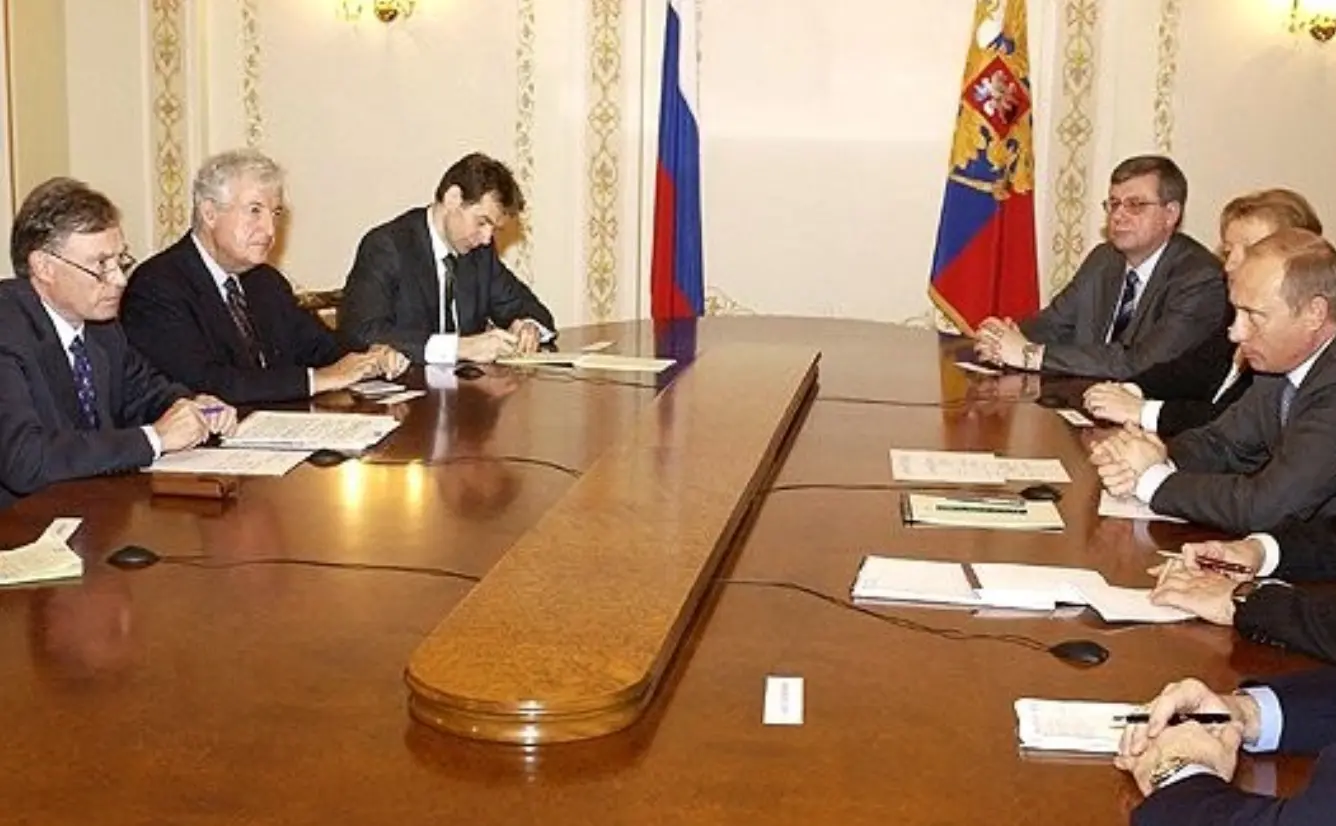
Into this instability, Western institutions, especially the International Monetary Fund, pushed for rapid economic reform within this new form of Russian governance. In practice, this was reflected through a series of IMF-backed stabilization programs and structural adjustment policies in the early 1990s, which required Russia to now liberalize prices, reduce state subsidies, and rapidly privatize state-owned industries as conditions for IMF financial assistance. These reforms were based primarily on neoliberal ideologies that aimed to help prioritize liberalization, privatization, and reducing state control from having a strong arm over the Russian economic exchange. The assumption was that creating these new markets would help to make things more efficient, and institutions would gradually develop naturally over time, unlike before, where the framework for the everyday Russian citizen was to work entirely for Russia and not themselves. The reason for bringing capitalist ventures into Russian society was not only to help prop up the economy, but also to move away from these fixed exchanges between the state and the citizens. Instead of working for the government and having everything supported by the government, these liberalist transitions were aimed at helping prop up individual selves rather than the collective entity. Neoliberal reforms assumed that institutional convergence would help make these pre-existing markets function without a strong institutional foundation, but post-Soviet Russia didn’t have that, they didn’t have the economic stability that these reforms could uphold.
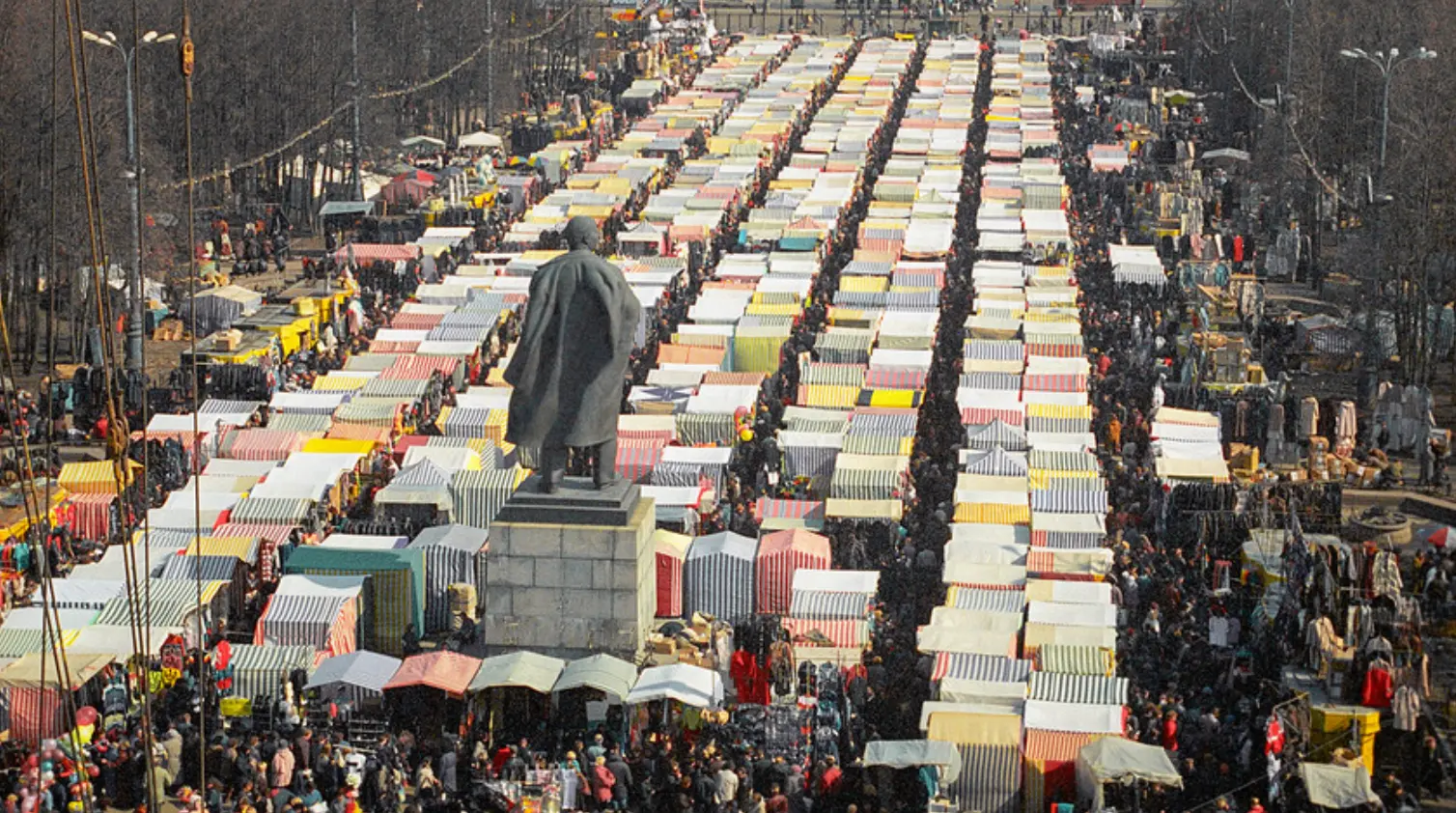
Russia could never transition gradually; reforms were implemented quickly and all at once. Coming from a structured system, flawed nonetheless, but structured in a way of conformity, these rapid changes ultimately led to the instability within the system. Prices were liberalized, state industries began to be privatized, and economic controls were removed almost immediately. These changes happened faster than any institution could actually develop, and as a result, market mechanisms were introduced without the systems needed to regulate them. So, instead of creating stability, these reforms accelerated uncertainty and uneven outcomes. It made economic outcomes unpredictable and uneven across different sectors, and individuals and businesses had to rely on alternative ways to manage risk and uncertainty. In many cases, this meant turning to already existing informal networks rather than these new formal market mechanisms. So, this new environment made it easier for those with connections and access to take advantage of the transitioning process. The existing connections didn’t help everyone in the sense that it reads like, but instead only those who were already favored. Giving a sense of capitalism within its own informality.
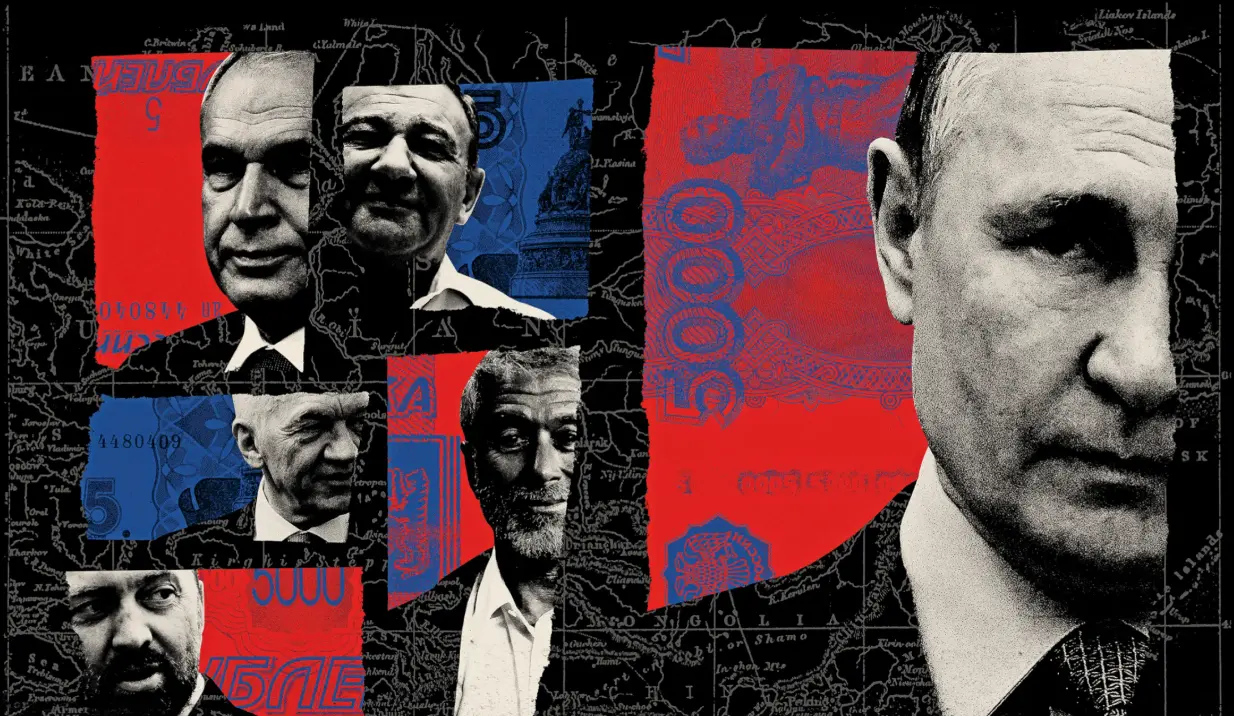
One of the central reforms was the privatization of state-owned enterprises. The goal was to transfer ownership into private hands and open up a new lens of competition in a market economy. In practice, privatization was often controlled by individuals with access to political power and networks, again not really advocating for the average Russian citizen. The sectors most affected included oil, gas, metals, banking, telecommunications, media, and heavy machinery industries. During the loans-for-shares period, politically connected businessmen gained far more control over major state assets. Mikhail Khodorkovsky gained control of Yukos, Vladimir Potanin became tied to Norilsk Nickel, Boris Berezovsky became associated with Sibneft and media shareholdings, and Roman Abramovich also became linked directly to Sibneft. These figures were not simply ordinary market buyers, but instead, they were actors with access to state officials, financial institutions, and insider networks that gave them privileged access during this shifting privatization period. But existing informal connections played a major role in determining who actually gained access to these assets. This supports the argument that neoliberal reforms assumed institutions would develop alongside markets, but this never proved sufficient. Russia, instead, became more of an experimental case where market reforms were implemented without the institutional structure needed to support them. Patterns similar to Russia’s case in other emerging markets show that weak accountability and institutions often lead to distorted reform outcomes straight from the start. So, instead of creating broad market participation, these reforms led to a greater concentration of wealth and control in the hands of a small group.
At the same time, there was little enforcement of property rights or regulatory oversight. This made formal rules unreliable and inconsistent, exposing a major flaw in how these economic reforms were being implemented. In this kind of environment, informal networks became even more important for navigating economic activity, especially for individuals who had previously relied on state support and now had to find new ways to secure income and stability. Rather than replacing these informal systems, liberalization only created conditions where they would become even more valuable than the system they aimed to induce. As a result, economic transactions increasingly depended on personal connections, trust, and access rather than new reformed rules. In many cases, intermediaries played a growing role in linking individuals, businesses, and even state actors, as a matter of fact, helping to facilitate exchanges that formal institutions could never reliably support in the first place. These network-based interactions further allowed people to work around weak enforcement and uncertainty, but they also reinforced the importance of informal systems over formal ones. Instead of strengthening institutional development, this dynamic further embedded informal practices into the structure of the economy, making them a necessary part of how economic activity functioned during the transition.
By the time reforms were fully underway, the economy was already operating through a mix of weak formal institutions and stronger informal networks. Because of this, neoliberal reforms never truly produced the institutional outcomes they were designed to achieve. Instead of these reforms creating a stable, rules-based market system, liberalization reinforced the informal structures that were already being used and continued to shape the existing economic behavior. This outcome challenges the assumption that markets alone can generate effective institutions, especially in environments where state capacity is weak. Understanding this gap between theory and reality aims to explain why Russia’s transition did not follow the path that neoliberal models predicted. This reflects a broader issue within international political economy, where neoliberal reform models assume that markets can function independently of strong institutional foundations.
Theoretical Explanations for Institutional Failure in Post-Soviet Russia
Everything was collapsing and being rebuilt at the same time, to think of restructuring a global superpower from the ground up. The failure of neoliberal reforms in Russia shows a clear gap between what theory predicts and what actually occurs. Within international political economy, economic neoliberalism assumes that introducing markets, liberalization, and privatization will lead to greater efficiency and eventually support the development of stable formal institutions over time. Helping to reshape a once state-centric institutionalist society to a more modern-day open market society. However, Russia’s transition couldn’t help but follow these expected patterns over time. Instead of producing a functioning system of formal rules and enforcement, the reforms resulted in further instability and the persistent use of informal practices to which citizens were already fond of. To understand why this happened, it is necessary to examine how different theoretical perspectives aim to explain institutional outcomes. This also reflects a core assumption in economic neoliberalism, where market liberalization is expected to drive institutional development.
Economic neoliberalism argues that markets promote efficiency, drive up competition, and long-term institutional development. As markets expand, formal rules and regulatory systems are expected to emerge to support and stabilize economic activities. This logic was central to IMF-backed reforms in post-Soviet Russia, where liberalization and privatization were seen as the first steps toward building a modern market economy. Under this kind of framework, informal systems are expected to decline as formal institutions become stronger and more reliable. This kind of assumption is that over time, market forces will replace inefficient or informal practices with structured and enforceable systems.
Neoliberal institutionalism, however, should be separated from economic neoliberalism in this sense. While economic neoliberalism mainly focuses more directly on market liberalization, privatization, and competition, neoliberal institutionalism is more concerned with how institutions help actors cooperate under conditions of uncertainty. From this perspective, institutions aren’t obligated to have pure formal or state-created rules. They can also be informal systems that establish their own expectations, provide information, and make repeated interactions more predictable with less emphasis on the rules themselves but on individuals operating within that framework. This matters for the Russian case because blat was not simply an obstacle to institutional development; it was functioning as this kind of informal institutional arrangement, intertwined yet different. Through trust, reciprocity, and repeated exchanges, blat provided a structure for cooperation in an environment where formal institutions were weak or unreliable. With this, neoliberal institutionalism can help explain blat because participants used repeated interactions to help build trust, share sensitive information, and create expectations that favors would eventually be returned as a sense of currency or trade agreement. This also connects to regime theory, the predecessor of neoliberal institutionalism, because regime theory treats institutions as rules, norms, and practices that can be formal and also informal.
Russia’s experience clearly contradicts the expectations of economic neoliberalism, but it can be partially explained through neoliberal institutionalism. While economic neoliberalism expects formal market institutions to develop after liberalization takes place, neoliberal institutionalism helps explain why informal institutions such as blat remained pivotal; they reduced uncertainty, provided information, and helped create expectations of reciprocal behavior. Even when markets were introduced, formal institutions never got the chance to develop in a way that could support or regulate economic activity effectively. Instead, weak enforcement, instability, and uneven reforms only allowed informal systems to continue rising in modern practices. Rather than transitioning toward a rules-based system, economic behavior continued to rely on forms of informal networks. This suggests that market liberalization alone is not enough to produce institutional stability, especially in environments where the foundational structures needed to support those markets are weak or missing entirely. In this case, Russia exposes a major limitation in the neoliberal assumptions for building market reforms in an already broken economy.
A realist perspective offers a different explanation for why these reforms failed. Sovereignty is closely tied to political stability, and more stable regimes tend to be more competitive. Rather than actually focusing on open markets, realism emphasizes power structures, state capacity, and the role of elites in shaping economic outcomes. In post-Soviet Russia, weak institutions allowed individuals with political influence, strong informal networks, and oligarchs to now take control of key parts of Russia’s economy, raising a realist question about whether the gains from reform actually strengthened the state or weakened it. Striding furthest away from its previous Marxist ideologies to a now capital fundamentalist within the Russian Federation. As seen in the privatization process, access to resources was often determined by connections rather than competition. This meant that economic outcomes were shaped less by market efficiency and more by who actually held the ability to influence and hold control over the system. In this sense, institutions never developed randomly; they were never fully supported or enforced by a strong, well-backed state to begin with. From a realist perspective, the central problem isn’t that privatization fails to benefit all citizens, but that major economic gains were not consistently converted into stronger state capacities. Instead, strategic assets were often being transferred into private hands through politically connected networks, which weakened the state’s control over major economic resources. If oligarchic privatization had strengthened the Russian state, realism would help interpret the reforms as a tool of state-building. However, because many strategic assets were stripped from the state and transferred to private actors with political connections, the Russian case only partially fits realism. Realism helps to explain elite competition and weak state capacity, but the outcome itself does not reflect a successful consolidation of state power.
While realism helps explain the role of power and elite control, it does not fully explain how everyday economic activity actually functions. It focuses more on the structure of the system rather than the mechanisms that drive behavior within it. In other words, realism can help explain who holds power, but not necessarily how transactions and exchanges take place on a daily level. This leaves a major gap in actually understanding how the economy continued to operate despite weak institutions. To fully explain this, it becomes necessary to look beyond both neoliberal and realist perspectives entirely. This is where informal institutions become important. Informal systems operated alongside, and sometimes in place of, formal rules and regulations that were put in place. In environments where formal institutions are weak or unreliable, these systems often take on a larger role in organizing economic activities. They provide us with alternative ways to establish trust, coordinate exchanges, and access more resources. In the case of Russia, informal institutions became central to how the economy functioned during the transition period. Rather than disappearing, they only adapted to their new environment and continued to shape its behavior.
Blat is a key example of this type of informal institutionalism. It helps represent a used system of exchange based solely on personal networks, reciprocity, and access rather than formal rules. While it existed under the Soviet system, it became even more important during the transition to a market economy. Blat did not simply exist alongside formal institutions in many cases; it substituted for them instead. It provided a way to navigate uncertainty, secure resources, and help carry out transactions in a system where formal enforcement was weak. This helps explain why institutional development did not occur in the way neoliberal theory predicted. Taken together, these perspectives help explain the outcome of Russia’s economic transition. Neoliberal institutionalism explains what should have happened, while realism explains the role of power and weak state capacity. However, it is the role of informal institutions, particularly blat, that explains how the system actually functioned the way it was supposed to. Instead of being replaced by formal market structures, informal networks became embedded within the economy and helped continue to shape economic behavior. This combined framework provides a clearer explanation for why liberalization reinforced informal systems rather than replacing them.
Blat as a Parallel Institutional System
What distinguishes blat networks from earlier discussions is not just their existence in the first place but how they actually functioned within economic activity and transactions. Rather than viewing it as a leftover from the previous Soviet system, it is more accurate to see it as a formalized system that actively organizes exchange and transactions. In the absence of reliable formal institutions, economic interactions are structured through relationships, access, and mutual obligation. Rather than utilizing contracts or any formal enforcement. From an international political economy perspective, this shows how markets can operate through alternative formats of coordination when standard institutional frameworks are often weak or uneven, at least in Russia’s economic sphere.
At its core, blat functions through networks that connect individuals across different levels of the economy. Instead of relying on open market access, individuals were dependent on who they know and what they can offer in return. These exchanges are not random; they follow patterns based on trust, reputation, and repeated interactions with one another. Hence the reference, I scratch your back, you scratch mine. Creating a system where access to resources is negotiated through relationships rather than determined by formal market rules. In practice, this means that economic outcomes are shaped less by competition itself and more by network positioning.
Before 1991, blat was used commonly to obtain scarce consumer goods and services such as food, medicine, housing repairs, clothing, automobile parts, apartments, medical appointments, and access to better schools or jobs. After 1991, however, the specific goods and opportunities started to shift, but the logic of access still remained similar to the prior. Blat networks became useful for obtaining business licenses, government contracts, privatized assets, bank credit, protection from regulators, office spaces, and connections within emerging private industries. This shows that blat never truly ended after the Soviet period, but instead, adapted from a shortage economy into the new market economy.
One of the main features of this system is the role of intermediaries. These individuals act as connectors, linking actors who would otherwise have no direct access to one another. Whether it is securing business ventures, accessing state resources, or navigating regulatory barriers, intermediaries helped facilitate transactions that formal institutions were never able to support effectively. This adds another layer to how the economy functions, where influence and connections become forms of capital that can be used to gain forms of an advantage. From an international political economist standpoint, this challenges any idea that markets operate primarily through price signals and competition rather than other varying factors.
More importantly, blat does not exist normally alongside formal institutions; it often replaces them in actual use cases. In environments where contracts cannot be reliably enforced, trust is established through personal relationships. Where regulatory systems are inconsistent, access is gained through connections as well. Instead of relying on formal mechanisms, individuals turn to networks that provide more predictable outcomes. Creating a new parallel system of exchange that fulfills many of the same roles that formal institutions held, but operates entirely through different and custom-ingrained rules. This helps explain why international efforts to promote market-based reforms did not produce the expected results. External actors like the International Monetary Fund introduced policies based on the assumptions that formal institutions would develop alongside markets. However, because informal systems like blat were already organizing economic behavior, these reforms did not replace existing practices. Instead, they were absorbed into a system where networks continued to determine how these resources were being distributed and how these transactions were being carried out.
In this sense, blat should not be seen as just another secondary or informal feature of the Russian economy, but as a central mechanism that shapes how these markets actually function. It provides a more grounded explanation for why Russia’s transition never aligned with neoliberal expectations and highlights the full importance of informal institutions in understanding outcomes within the international political economy. More importantly, it shows that liberalization did not replace these systems but instead helped to create conditions that allowed them to become even more embedded and influential in shaping economic behavior.
Liberalization and the Reinforcement of Informal Networks
Building on this, liberalization in Russia did not dismantle informal networks; it actually recalibrated them to work more efficiently. The reforms introduced by the IMF policies were designed in a way that once markets were to open and state control was reduced, formal institutions would naturally emerge to regulate their economic activity. In theory, this process would replace inefficient or informal practices with more transparency and adhere to a standard of rules-based systemology. In reality, these reforms were implemented in an environment where the institutional groundwork necessary to support them was either incomplete or entirely absent. Rather than creating a clean break from the past, liberalization was absorbed into an already functioning system of informal exchanges.
This disconnect between policy design and institutional reality created what can best be described as a structural vacuum. Markets were introduced, but the mechanisms needed to regulate them with legal enforcement, property rights, and credible oversight lagged or fundamentally failed to materialize in any meaningful way. In this space, informal networks did not simply survive; they expanded upon every opportunity they could find. Instead of competing with formal institutions, they became the more reliable option in this circumstance. When contracts could not be enforced, and regulatory systems lacked consistency, individuals turned to what provided consistency and certainty. Their relationships, trust, and network-based access.
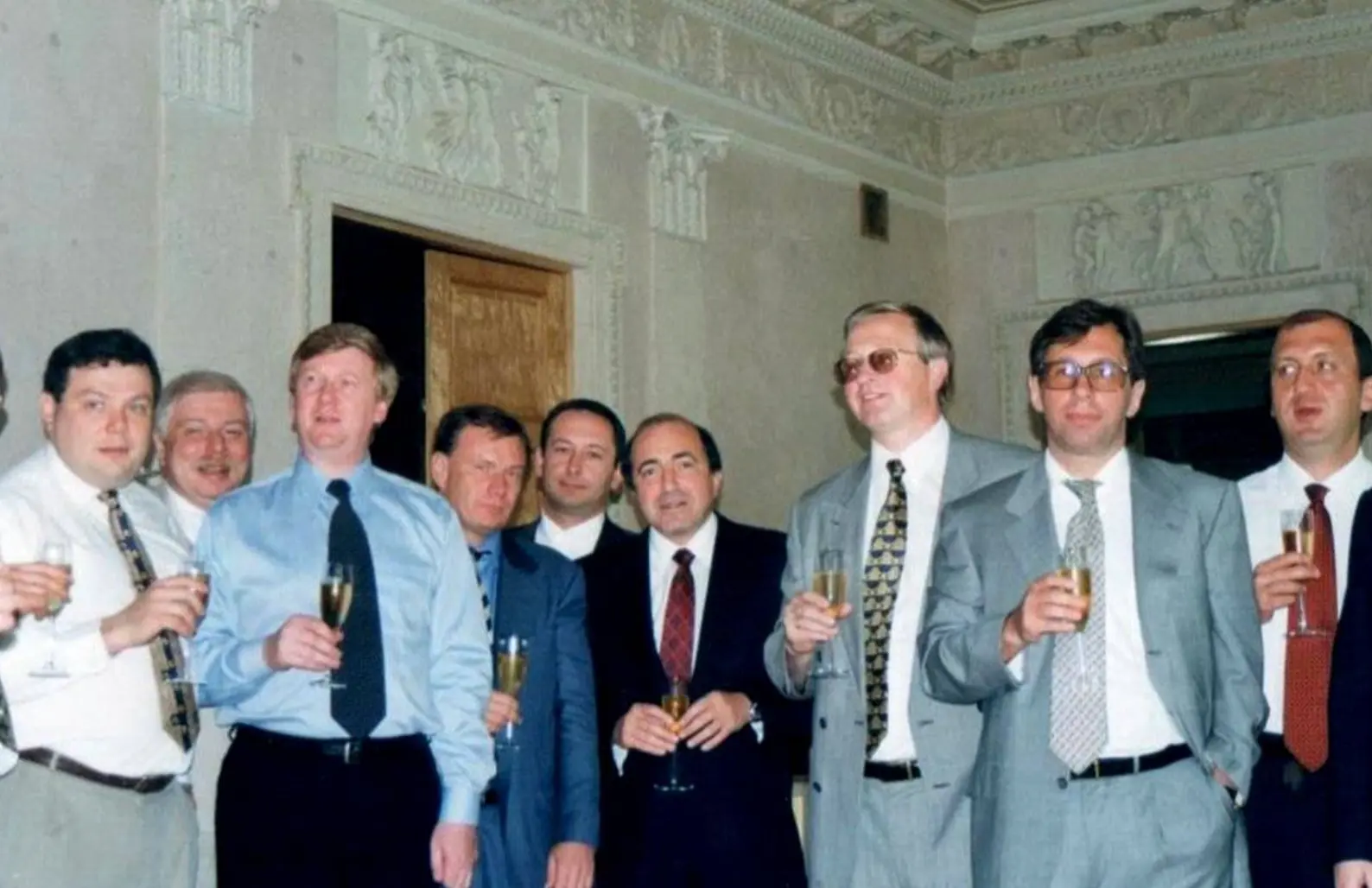
The process of privatization further intensified this dynamic as well. While it was intended to distribute ownership and encourage competition, it often resulted in the consolidation of assets among a relatively small group of individuals with political access and established networks. The transfer of oil, metals, banking, and media assets to figures such as Khodorkovsky, Berezovsky, Potanin, and Abramovich demonstrates just how privatization rewarded political and network access rather than actual broad market competition. This was not a failure of markets being stuck in isolation, but a reflection of how those markets were already embedded within existing social structures. Consistency and safety were built into systems of normality, and the commonwealth derived from their already existing connections. In many cases, the ability to acquire state assets depended less on financial capacity and more on one’s position within informal networks. The emergence of oligarchic structures during the 1990s is a clear example of this outcome, where economic power became concentrated through a combination of political influence and network advantage rather than open competition.
From an international political economy perspective, this illustrates a pivotal limitation of externally driven reform strategies. The IMF and similar institutions operated under a model that prioritized rapid integration in global markets, often treating institutional development as a secondary or self-correcting process. These policies were not simply theoretical recommendations, but instead were tied to concrete financial assistance packages that conditioned Russia’s access to international capital on its willingness to implement rapid market reform. However, by introducing market mechanisms without ensuring the presence of strong domestic institutions, these reforms inadvertently reinforced the very systems they were meant to replace. Informal networks did not just resist liberalization; they adapted to it, embedding themselves more deeply into the structures built directly inside the economy. This had measurable consequences for how economic outcomes were being distributed. Instead of improving efficiency across the board, liberalization continued producing uneven gains, where access to opportunity was filtered through informal channels. Market entry was not determined solely by competition or innovation, but by proximity to networks of influence. In this sense, the market never disappeared; it was reconfigured, nonetheless. What emerged was never going to be a fully liberalized system as desired, but a more hybrid model where formal rules existed alongside, and were often overridden by, informal practices.
Ultimately, liberalization in Russia did not fail in the sense of being rejected; it failed because it operated under the wrong assumptions from the get-go. It is assumed that markets would discipline behavior and generate institutions, when in reality, existing social structures reshaped how those markets functioned. Rather than dissolving its informal networks, reform policies provided them with new arenas in which to operate. This reinforces the broader argument of this paper, that informal institutions are not peripheral to economic systems, but central to understanding how they truly function, especially in transitional environments shaped by international economic interventions. Taken together, these outcomes demand a more critical examination of how international political economy frameworks conceptualize institutional development under conditions of structural instability
Implications for International Political Economy Theory
The Russian case outlined in this paper exposes a fundamental limitation within economic neoliberal frameworks, more specifically, the assumption that market liberalization possesses an inherent capacity to generate stable and self-sustaining institutional structures. While neoliberal models help emphasize the efficiency of enhancing properties in open markets and competition, they tend to treat institutional development as an endogenous outcome of market expansion rather than as a precondition for its own success. The experience of post-Soviet Russia demonstrates that this sequencing is not only flawed but analytically insufficient, as liberalization in the absence of institutional capacity does not lead to convergence, but instead amplifies its existing structural deficiencies. Rather than displacing informal practices, the introduction of market mechanisms without enforceable legal and regulatory frameworks allowed those practices to continue and, more critically, to adapt to the new economic environment. This suggests that economic neoliberalism systematically underestimates the resilience of pre-existing social structures in shaping economic outcomes. Neoliberal institutionalism also adds a different insight to this as well. If institutions are understood as formal and informal rules that structure expectations, then blat can be analyzed as an informal institution rather than merely as corruption or market failure.
At the same time, while realist perspectives provide a more convincing account of the role of power, states internal weaknesses, and elite consolidation in determining the trajectory of economic reform, they too remain incomplete when taken into account of isolated factors. Realism successfully explains why certain actors, like political elites and well-positioned networks, were able to capture the real benefits of privatization and influence the direction of reform, yet it offers limited insight into the mechanisms through which everyday economic activity continues to function in the absence of reliable institutions. By focusing specifically on state capacity and power asymmetries, realist approaches risk overlooking the micro-level processes through which economic coordination is sustained. In the Russian case, the persistence of economic exchange was not simply a function of elite control but the continued operations of informal networks that facilitated transactions, distributed resources, and maintained a degree of predictability within an otherwise unstable system.
This is where the incorporation of informal institutions becomes essential for advancing international political economy as a field. Informal systems such as blat should not be treated as peripheral irregularities or deviations from formal economic order, but as integral attributions of how economies function under conditions of institutional uncertainty. As demonstrated throughout this paper, blat operated as a parallel institutional framework, providing the trust, enforcement, and coordination mechanisms that formal institutions failed to deliver. In doing so, it effectively substituted for key institutional functions, reshaping not only how economic transactions were actually being conducted, but also how power and opportunity were being distributed within this system. This challenges the conventional dichotomy between formal and informal economies, suggesting instead that they are deeply intertwined, particularly in this economic transitional sense.
More broadly, the Russian experience calls for reconsideration of how international actors, such as the International Monetary Fund, conceptualize and implement reform strategies in developing or transitional economies. The assumption of this integration into global markets helps serve as a catalyst for institutional development, overlooking the possibility that such integration may instead reinforce existing informal structures when institutional capacity is weak. In this sense, the failure of reform in Russia should not be understood as a rejection of neoliberal principles but as a misalignment between externally imposed economic models and the domestic institutional environment into which they are actually being introduced. This has significant implications for policy design, as it suggests that effective reform must account not only for formal institutional development but also for the embedded informal systems that shape economic behavior at multiple levels of the transitioning period.
Ultimately, the implications of this case extend far beyond Russia itself and speak to a broader theoretical gap within international political economy. Neither neoliberal institutionalism nor realism, on their own, fully captures the complexity of institutional formation and economic coordination in environments characterized by instability and weak governance. A more comprehensive framework must incorporate the role of informal institutions as active, adaptive, and often dominant forces within the economic system. By doing so, it becomes possible to better understand why market reforms succeed in some contexts while failing in others, and to move toward a more nuanced and empirically grounded approach to analyzing economic transformation in the global system.
Conclusion
Russia’s post-Soviet transition shows that market reform cannot be understood only through policy design or theoretical expectations. IMF-backed liberalization assumed that once markets were opened, state control would be reduced, and privatization implemented, formal institutions would gradually develop and stabilize economic life. But Russia itself entered this transition with weak institutional capacity and deeply embedded informal networks that already shaped how access, exchange, and trust operated. Because of this, liberalization did not create a clean institutional break from the Soviet past. Instead, it entered a system where blat networks were already functioning as a practice form of economic transactions and coordination. Economic neoliberalism helps explain what international reformers expected to happen, while neoliberal institutionalism helps explain why blat remained effective as an informal system of trust, reciprocity, and repeated exchange. Realism helps explain how weak state capacity and elite power can fundamentally shape the outcome, but none of these perspectives fully explains the internal mechanics of Russia’s transition without taking informal institutions seriously. Blat fills that gap because it shows how people, businesses, and elites navigated in a market system where formal rules were unreliable.
Ultimately, the failure of IMF reform in Russia was not simply a failure of markets, nor was it only the result of corruption or poor implementations. It was a deeper mismatch between externally promoted economic models and the domestic institutional reality in which they were introduced. Russia’s experience demonstrates that informal institutions are not secondary features of political economy; they can become central mechanisms through which markets operate, power is openly distributed, and reform outcomes are actually shaped. For international political economy, this case matters because it challenges the assumption that liberalization naturally produces institutional development. In transitional economies, markets do not enter empty space; they enter historical, political, and social environments that can reshape them entirely. In Russia, the result was not a stable rules-based market order, but instead a hybrid economy where formal reforms strengthened the informal systems they were supposed to replace. This is why understanding blat and informal networks is essential not only for understanding post-Soviet Russia, but for a better understanding of the limits of neoliberal reform in weak institutional environments. In the end, Russia’s transition makes it clear that markets do not create order on their own, but institutions do, and in the absence of strong formal institutions, informal ones will eventually rise up and take their place.
Resources & Archival References
Bibliography
- ResearchGate link for pdf download
- Illicit International Political Economy: The Clandestine Side of Globalization
- The Futility of the Neoliberal Policy of Deliberate Market Construction and the Promise of an Institutionalist Alternative: The Case of Russia’s Authoritarian Transition
- From Russia with Blat: Can Informal Networks Help Modernize Russia?
- Russia’s Economy of Favours: Blat, Networking, and Informal Exchange
- How Russia Really Works: The Informal Practices That Shaped Post-Soviet Politics and Business
- Neoliberalism, Accountability, and Reform Failures in Emerging Markets: Eastern Europe, Russia, Argentina, and Chile in Comparative Perspective
- From Prefix Capitalism to Neoliberal Economism: Russia as a Laboratory in Capitalist Realism
- Globalization and Post-Soviet Capitalism: Internalizing Neoliberalism in Russia
- The Changing Contours of Corruption in Russia: Informal Intermediaries in State-Business Relations
- Between Neoliberalism and Difference: Multiple Practices of Property in Post-Soviet Russia
- Leveraging Symbolic Capital: The Use of Blat Networks across Transnational Spaces