POLITICAL SCIENCE - DISCUSSION POST 4
by Tobin Albanese
Volume 4 Thu Mar 26 2026
The question that was prompted:
In a democratic system, is an elected official justified in acting against public opinion? If the official's own experience and judgment dictate one course of action but the public, as measured by opinion polls, clearly prefers another, which should the elected official choose?
Question 1
Within our democratic system, and others, I actually do think an elected official can justifiably act against public opinion, but only if they're doing it for the right reason or outcome. The publicity aspect, however, sometimes I think it works best if the citizens of our nation didn't know everything that's happening behind closed doors of our governance. Don't get me wrong, I strongly believe in transparency, but transparency at a distance. The world is a big place, and many actions have to be done to further protect our commonwealth and way of life. For example, think of the drone bombings of terrorists that Obama concurred, I don't think publicizing that for any and all is the right thing to do, but also the action in itself can be justified as right. And there are many of these cases like that, where actions are being done behind the understanding of the public or their opinion to further better the public's endeavors. Democracy itself isn't just "do whatever a poll says." If that were how our governance worked, the entire leadership dynamic wouldn't even matter; we would just run the country itself like a fluctuating "vibe" that shifts and changes with the populace's opinions. And trust me, seeing how widespread our social dynamics work, this would be a horrible idea. One of the biggest issues is that public opinion is real, but it's also extremely volatile and unstable. Janda reminds us of this with "polls estimate the vote only at the time they are taken." (Janda, P.121) That matters, though. People's opinions change quickly, especially when the media cycle is intense, like election season, when something scary happens, or even when an issue gets framed differently. Seeing how, so much of our society spends on TikTok or Instagram, and the use of bots from foreign actors, you can see how the ideological shifts can happen very fast and up and down as well. "the way in which survey questions are worded can also change results."the way in which survey questions are worded can also change the results." (Janda, P.121) So any officials treating polling like the higher voice, they're basically letting the question designer and media control the entire premise. That isn't democracy, that's manipulation at its core and is exactly what occurs in places like North Korea or previous dictatorships, where you are only fed what you want to hear, but the individuals you're hearing it from are controlling the narrative itself. Again, I am not saying public opinion doesn't matter. It absolutely does. “Some Americans are highly ideological and cannot bring themselves to consider compromising with the other side, but many are not.” (Janda, p.134) In a functioning democracy, the public is the source of legitimacy. The public is also the one who suffers the consequences when those policies fail. So officials should treat public opinion like a tool, not like a commandment. It's ultimately information, not automatically right or wise.
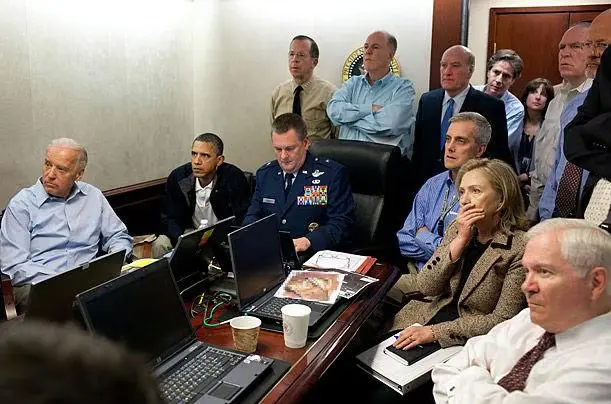
So, where I land in all this is that officials should respond to our values, but independently of higher decisions. Meaning, you should care what your voters care about, what problems they're feeling, and what lines they don't want to have crossed. But on further complex policy decisions, especially ones involving national security, crime, economic stability, or really anything that requires classified intelligence, the average person won't understand or be able to obtain the full picture. Trust me, I wish we could, but ultimately, we shouldn't be able to see the full picture in that sense. The public isn't sitting in intel briefings, reading threat assessments, or reviewing the second and third-order effects of policy. And I feel this is the best way not just for our national security, but this ties directly into too much public transparency, also leaks out more intelligence that foreign adversaries can use against us. So in the end, elected officials are who we all appoint and put our faith and trust into. If their judgement is informed especially with more details the public can't obtain, they should ultimately use it to our advantage and best interest. In the sense of a crisis, I'd rather have a leader make an unpopular call that prevents a situation from collapsing over chasing approval numbers any day. I'm very big on order and stability as a baseline. I've said in previous discussions that societies can degrade faster than people think, and I still believe that. When institutions weaken, corruption grows, and violence starts becoming a normality, you don't just lose policy debates; you wind up losing the entire framework that makes our freedom possible in the first place. So, should candidates/officials be driven by polls or by their own beliefs? It's honestly neither, at least not blindly. Polls can help individuals understand what people fear, want, and emotionally but never the definitive answer. “Sampling theory does not claim that a sample exactly matches the population, only that it reflects the population with some predictable degree of accuracy.” (Janda, p.120) Beliefs and judgment should only guide them toward a more long-term outcome and constitutional responsibility. The best leaders don't outsource their decisions by polling, but they also don't treat the public like an obstacle. They lead, they explain, they adjust to the common perspective, and they're honest when they're choosing a difficult path. A representative can go against public opinion as long as it ultimately leads to protecting or advancing the public interest.