STRATEGIC PROXIES:
Explaining Iran’s Support for Hezbollah Through Realist Theory
by Tobin Albanese
Volume 1 Mon Jun 08 2026
This paper examines Iran’s support for Hezbollah as a strategic proxy relationship shaped by realism, arguing that Tehran’s sponsorship is driven less by ideology alone and more by survival, deterrence, regional influence, and the ability to project power without entering direct military confrontation.
Modern conflict does not always begin with a formal invasion or a direct declaration of war. In many cases, states compete through indirect pressures, armed networks, and political relationships that allow them to shape events without fully exposing themselves. It gives states the ability to project power while avoiding some of the costs that come with direct military confrontations. So, the central hypothesis of this paper is that Iran’s support for Hezbollah is best explained through realism because the relationship is driven less by ideology alone and more by Iran’s strategic need for survival, deterrence, regional influence, and asymmetric power. Iran’s relationship with Hezbollah is one of the clearest examples of this kind of strategy. Hezbollah itself means “Party of God,” and on the surface, the relationship between Iran and Hezbollah is often explained through religion, ideology, and shared resistance against Israel and Western influence. But ideology alone does not help to explain the full picture. Iran’s support for Hezbollah is not simply religious, symbolic, or emotionally driven. It is rational and strategic from a realist perspective. If the relationship were only about shared Shia identity or anti-Israel ideology, then it would be much harder to explain why Iran’s support for Hezbollah fits into a broader regional strategy of proxy tactics to project power across multiple conflict zones while still reducing direct exposure.
From a realist perspective, this relationship makes sense because states are always trying to survive in a system where no higher authority can fully protect them. Iran faces stronger conventional adversaries, especially Israel and the United States, and a direct war with either one would create major military, political, and economic risks. So instead of depending solely on traditional military power, Iran uses Hezbollah as a way to balance its strategic incentives against stronger actors by creating deterrence and expanding its influence beyond its own borders. This matters because Hezbollah gives Iran something a normal military strategy could not always provide. It gives Iran a forward position near Israel, strategic depth outside Iranian territory, and an asymmetric way to project power without placing Iran directly at the center of every conflict. Proxy warfare may give Iran more room to maneuver, but it does not give Iran full control. Hezbollah should not be understood as an actor that Iran can fully command or activate whenever it chooses. It has its own leadership structure, its own political role inside Lebanon, and its own domestic pressures, all of which can sometimes move in a different direction from Iran’s broader regional strategy. At the same time, that separation creates uncertainty because influence through another actor never comes with complete control. This shows that proxy warfare can strengthen a state’s position, but it does not remove the risks that come with using another actor to carry out force. Iran gains strategic reach, but it also accepts the dangers that come with depending on another actor. It can shape events from a distance, but it cannot separate itself completely from the consequences. That tension is what makes proxy warfare so effective, but also so unstable.
Background: State Sponsorship and Hezbollah
Over the years, many states have gradually shifted away from reliance on direct state-to-state conflict and have increasingly used non-state actors to advance their interests. These groups allow states to continuously apply pressure, gain further influence, and maintain a level of plausible deniability without having to use their own troops or military assets directly. The reason for doing so is that plausible deniability is a strong aspect of a state’s deterrence strategy. This has fundamentally evolved into states sponsoring terrorist organizations or additional local militias to push into regions without the use of their own troops and or military assets. Thus, advancing Hezbollah, which was once a small group of individuals, into a full-fledged political backbone with infrastructure, military, and resources.
State sponsorship of terrorism has evolved relatively throughout our modern global international system. This form of structural terrorism stems from the ability of a state actor to funnel resources and assets into non-state organizations, a practice that has significantly reshaped the way foreign policy is being conducted across many state actors. This expansion of smaller ideological groups only results from the funneling of resources and value from larger state sponsors. Within Iran and its Hezbollah network, the relationship is often first understood as a more ideological effort to promote resistance against Israel and expand its Shia influence across the region. Even though ideology matters here, it still does not explain Iran’s broader proxy strategy entirely.
Hezbollah clearly shares religious and political alignment with Iran, but that does not mean Iran’s support for proxy groups is only based on shared belief. Iran has also supported other militia groups across the region that do not always hold the same exact religious or political identity as Hezbollah. That is the part that matters. If a group can help Iran pressure Israel, weaken rival states, expand regional influence, or avoid direct military confrontation, then that group becomes useful to Iran regardless of whether the relationship is purely ideological. So, Hezbollah should not be viewed as just this isolated relationship built around religion or resistance alone. It fits into a larger pattern of Iranian behavior, where non-state actors become a way for Iran to project power, gain leverage, and push its influence beyond its own borders without always having to act directly.
The origins of Hezbollah stem from the invasion of the Israeli military during the 1970s Lebanese civil war. After the Islamic Revolution in Iran, the Shia movement in Lebanon started to grow; what was once the weakest religious group within the state has gradually shifted into becoming one of the largest. Stemming from South Lebanon, the initial support and influence from Iran was almost inevitable. Although publicly, Hezbollah was initiated and seen in the global international system as an organization that started in the early 1980s. From within the Lebanese Civil War, Hezbollah participated in many terrorist attacks, including kidnappings, bombings, and infrastructural damage, directly coordinated towards Westerners in the region. These sophisticated attacks against anti-Islamic regimes helped establish social services and networks for Hezbollah’s support.
During the fragmentation of political influence, power structures, and the religious groupings within Lebanon, the rise of Hezbollah could be considered almost inevitable. In 1982, Lebanese power was draining fast; within the weakened state, Lebanese state divisions were unable to fully protect Shia-majority areas from Israeli occupation. This vacuum of defense and military strategy is what fundamentally led to Hezbollah’s creation and fulfillment of becoming the military defender and political voice for the Shia community in the region. Hezbollah’s ideological blend of Shia Islamist principles framed itself against Israel as part of this broader resistance against Western and Zionist influence. Hezbollah’s inception was initially trained and resources supplied by Iran’s Revolutionary Guard Corps, giving Hezbollah a level of military influence rare compared to other Lebanese militias. This support helped enable Hezbollah to conduct further sophisticated guerrilla operations while also presenting itself as a defender of the Shia community. By offering security, social services, and political representation in the absence of a strong central state, Hezbollah gradually strengthened its role as almost a state within a state environment.
The relationship between Iran and Hezbollah stems from the beginning of Hezbollah’s creation. Iran deployed many members of the Islamic Revolutionary Guard Corps to the regions of Lebanon to help organize and train early Hezbollah fighters and continue to promote the Shia ideology around the country. Hezbollah wasn’t just supported by Iran; it was central to the organization's backbone from the beginning. Iranian actors helped to create and shape the influence of Hezbollah’s regime within the region. Continuing its path of adopting the Shia ideological elements that directly aligned with Iran’s elementary doctrine. During the vacuum of political influence and military structures within Lebanon during the 1980s, the Shia community created an opportunity for Iran to expand their influence and strategically prop up the small militia group into what it is now. Although Iran played a major role in this effect, we must consider Syria’s role as well, allowing Iran to freely access Lebanon at the time, giving the IRGC a greater opportunity to further support and train Hezbollah fighters on their strategic goals.
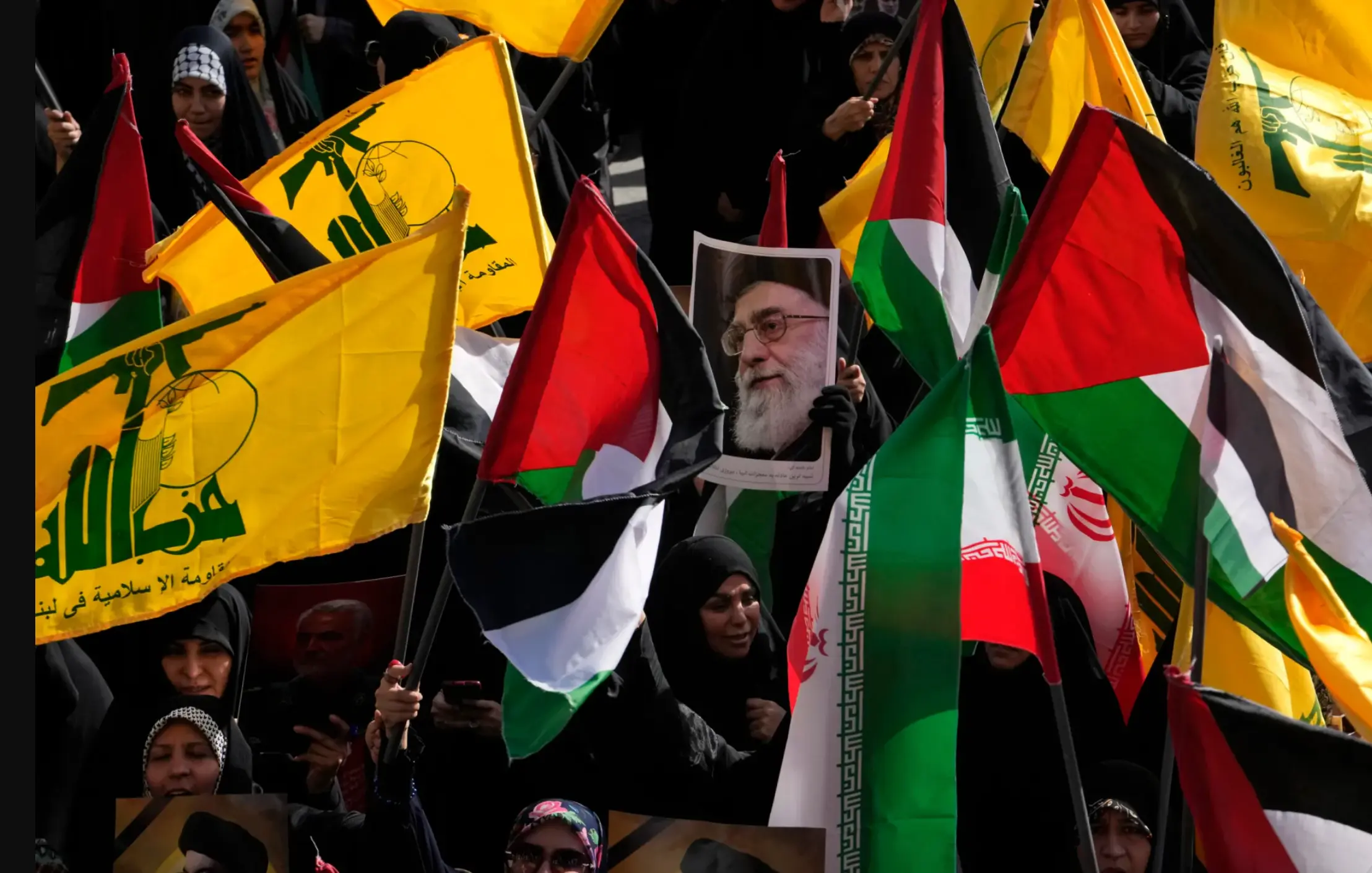
Over the years, Iran has become Hezbollah’s primary state sponsor by providing more than just military training and resources. Iran has provided Hezbollah with hundreds of millions of dollars annually. Allowing the organization to fund military operations against Israel, whether those operations are defensive or offensive. Including additional resources like social services in healthcare, schools, and even their own financial service with micro-financing banks, allowing Lebanese inner communities access to free loans and ATM services. This funding not only helped support Hezbollah’s growth but also created a state within a state infrastructure inside Lebanon. Within all this funding and political infrastructure inside Hezbollah, Iran is also allowed to support them militarily, supplying more advanced weaponry like rockets, missiles, and smaller arms. The growth of Hezbollah’s arsenal directly correlates with the significance of its relationship with Iran, propelling the organization significantly more than most non-state actors. This form of sponsorship by Iran was never casual but a more structured and institutionalized relationship.
This relationship between Iran and Hezbollah was never a puppet-master dynamic that many have perceived, but instead a more strategic partner in an alliance to progress Shia ideological stances within the region. Outside of many of the Iranian-backed strategic decisions for the organization, Hezbollah still holds its own day-to-day operations and local political actions. This separation is pivotal for Iran to deter any actions made by the organization while still receiving the same desired effect. As a result, Hezbollah becomes a powerful instrument through which Iran can carry out their foreign policy objectives without risking its own military forces or resources. Utilizing Hezbollah to project influence is also strategic and economically advantageous, as it allows Iran to achieve outcomes at a significantly lower cost than conventional warfare or diplomacy. However, Hezbollah has grown and is not an isolated case within Iran’s broader strategy anymore. Instead, it represents one of the several proxy groups that Iran uses to continue their operations across the region.
The use of these proxy groups and military strategies was not random. Across these cases, a consistent pattern shows Iran’s reliance on non-state actors throughout the region. From Iran’s initial exploitation of the Lebanese Civil War in the early 1980s to the current ongoing conflicts in the Middle East, it has consistently used non-state actors as a form of projecting power and influence in the region. Avoiding direct military confrontation throughout these conflicts was deliberately planned and executed. Beginning with Hezbollah as its first primary proxy, eventually developed geographically expansive and coordinated networks, including multiple militias in Iraq, Syria, and Yemen. Creating this infrastructure that Iran could use to expand its influence and strategic power outside of their own borders. Demonstrating exactly how proxy groups are used not only to avoid direct conflict but also to project one’s state power and influence across multiple regions simultaneously. This behavior reflects rational, strategic decision-making, which aligns closely with the core principles of realism in international relations. Understanding Iran’s reliance on proxy warfare, therefore, requires some examination into how realism explains different state behavior in pursuit of power, security, and influence.
Realism in International Relations
The patterns seen throughout Iran’s use of Hezbollah and its other proxy groups are not random but have grown into a methodical tool in Iran’s arsenal. The actions Iran takes can be seen as ideologically driven or aggressive on the surface, but that alone cannot fully explain what is actually happening. Instead, to understand Iran’s behavior, we must understand its actions through a theoretical framework, specifically realism, which focuses on how states act when no global authority exists to regulate their behavior. In this type of system, each state is forced to prioritize its own survival and security rather than rely on a system built around peace. As a result, states make strategic decisions to protect themselves from any external threats, where protectionism often outweighs any real form of peace and global diplomacy. Because of this, Iran’s reliance on proxy warfare fits within this framework and can be understood not just as an ideological expansion, but as a rational and strategic response to the pressures of an anarchic international system. By applying realism to Iran’s actions, its behavior becomes more structured and predictable, where the broader strategy is focused on maintaining power, avoiding direct conflict with stronger adversaries, and ultimately ensuring the survival and security of the state above all else.
Realism in international relations focuses on how states actually behave rather than how they would behave in an ideal system. Unlike theories that tend to emphasize cooperation or global stability, realism views international politics as competitive and more conflict-driven. Within realism, states are considered the primary actors, with each acting in pursuit of its own interest. Having this perspective also helps explain why states prioritize strategic advantages over cooperation, especially when their own security is at stake. This is seen when brokering peace deals; most tend to be relativistic rather than a unified outcome. Looking back at Iran’s behavior throughout the region, specifically with its use of proxy warfare, this framework becomes important in understanding why these actions are not just random but rather strategic patterns used by Iran in its desire for expansion and protectionism.
A main principle of realism is the idea that the international system operates under anarchy. Even during peaceful times, there are conflicts in every pocket of the world, meaning that no global authority exists above states to enforce rules or guarantee safety and security. Without a global authority, states cannot fully rely on international institutions or agreements for protection. This creates what is known as self-help systems, where each state is responsible for ensuring its own survival and prosperity. Because of this, states are constantly evaluating potential threats, operating under some level of uncertainty regarding the intentions of others. Whether cooperation is involved, states still must protect themselves, protect their citizens, economy, and resources. This lack of trust between states in the region reinforces the need for independent security strategies and some form of independent deterrence. In the case of Iran, this type of environment helps explain why it does not depend on traditional alliances alone but instead builds alternative networks of influence and protection within the region.
Within an anarchic system, the primary objective of any state becomes survival. All other goals, including ideologically or cooperative, become secondary when a state’s existence is at risk. To maintain survival, states rely on power structures, which can take on many different forms, from military strength, political influence, economic advantages, and strategic positioning. Power does not always mean direct domination, or even a major superpower, but rather the ability to deter threats and maintain security. Security in itself can be seen as cooperation, global influence, and regional advantages. From this perspective, Iran’s actions throughout the Middle East can be viewed as part of a broader effort to secure its positioning in a highly competitive environment. With the Strait of Hormuz as a global strait for oil distribution, Iran’s Axis of Resistance, the backed support of many Shia Muslims, and the military power Iran holds, also support the competitiveness of Iran’s behavior in the region. The use of proxy groups, specifically Hezbollah, becomes less about ideology with these additional factors and more about maintaining the influence Iran already holds and protecting itself against any external threats.
Because of survival as a top priority, states are forced to act rationally and make decisions based solely on calculated risks and strategic outcomes. Meaning evaluated costs, minimizing vulnerabilities, and avoiding actions that could lead to confrontation with stronger adversaries. In many cases, states tend to choose indirect strategies rather than engaging in direct conflicts, especially when the risks begin to look too high. Proxy warfare now becomes only one additional strategy in allowing states to project power and influence without committing their own military forces. In Iran’s situation, this approach provides a way to extend its reach across the region while reducing the likelihood of large-scale retaliation. These decisions reflect a calculated approach rather than an impulsive or purely ideological behavior.
While realism helps provide us with a general framework for understanding as to why states hold these behaviors, there are different interpretations within the theory, specifically between offensive and defensive versions of realism. Defensive realism tends to say states seek to maintain their security and avoid external threats, while offensive realism argues that states continuously attempt to maximize their power and expand their influence in any way possible. Iran’s behavior reflects both sides of realism at the same time. Its actions can be seen as defensive because they are meant to deter outside threats and reduce the chance of direct attacks against the state. But there is also an offensive side to it, since Iran’s use of proxy groups across multiple countries allows it to expand its influence and shape the regional balance of power in its favor. This is what makes the strategy more complex. Iran’s proxy network is not just a reaction to insecurity, and it is not only an expansionist project either. It is both, reinforcing the idea that proxy warfare is part of Iran’s broader effort to survive, maintain power, and preserve influence within the international system.
One of the more important consequences of realism’s anarchic international system is what is better known as the security dilemma. Within our international system, where no global authority exists to fully guarantee protection or enforce order, states are forced to take actions to secure themselves from any potential external threats. However, these kinds of actions, even when intended to be defensive, are often seen by other states as aggressive or expansionist behaviors. These behaviors ultimately lead to a cycle of uncertainty and mistrust, where one state’s attempt to increase its own security directly decreases the security of others. As one state begins to expand its power, influence, or military capabilities, surrounding actors begin to see their own vulnerabilities or future threats, prompting them to respond with their own buildup of power structures and military. As a result, even rational decision-making can lead to inevitable tensions. Where states continuously react to one another in ways that make conflicts more likely, rather than producing a stable system of peace.
In the case of Iran, its reliance on proxy groups such as Hezbollah fits directly within this dilemma. From Iran’s perspective, supporting Hezbollah provides deterrence, strategic depth, and a layer of indirect protection against stronger adversaries like Israel and the United States. For example, Hezbollah’s arsenal in southern Lebanon and its ability to engage Israel along their border serve as a forward deterrence for Iran, further reducing any direct conflict between Iran and Israel. Utilizing this broader network of proxy groups in Lebanon and Syria allows Iran to project influence and counter U.S. presence in the region without ever engaging in direct warfare. However, for external perspectives like Israel, Saudi Arabia, and the United States, this expansion of proxy networks is seen as a direct threat to regional stability and national security. Leading to counteractions such as Israeli airstrikes on Iranian-linked targets in Syria, U.S. responses to militia attacks in Iraq, and increased regional military coordination against Iranian influence. While Iran may view these forceful actions as necessary for its own protection, it’s actually interpreted as a form of offensive behavior by other actors, reinforcing the same cycle of the security dilemma. These dynamics contribute to the Middle East’s constant state of instability, where proxy warfare increases the chance for conflict and prolongs tensions between both state and non-state actors across the region.
Within a realist framework, proxy warfare can be understood as a practical strategy states use when survival and power are their main priorities. In an international system without a true higher authority, states cannot fully depend on outside institutions to protect them. They have to protect themselves at all costs. This forces states to think carefully about risk, cost, and the best way to defend their interests without creating even greater vulnerabilities. Because of this, direct warfare is not always the smartest option. Conventional conflict can drain resources, create political backlash, and expose a state to retaliation it may not be able to control. Proxy warfare, on the other hand, offers a different path. It allows states to project influence, pressure rivals, and shape conflicts without sending their own forces into open combat. This is why proxy warfare fits so clearly within the realist framework. It gives states a way to pursue security and regional influence while avoiding the full consequences of confrontation.
From this perspective, Iran’s relationship with Hezbollah is best understood as a strategic response to the pressures around it. It is not simply acting out of emotion or ideology. Iran understands that it is operating against stronger conventional powers, especially Israel and the United States, and a direct military confrontation would place the country in a dangerous position. For Iran, open war could weaken its economy, expose its military limitations, and threaten its long-term security in ways that proxy warfare does not. This is what makes Hezbollah so important to Iran’s regional strategy. Through Hezbollah, Iran can expand its influence near Israel without placing Iranian forces directly into the conflict. That matters because it creates a forward layer of pressure along Israel’s northern border. Any action taken against Iran becomes more complicated because the response would not have to come only from Iran itself. It could come through Lebanon, Syria, or other areas where Iran has already built influence over time. This also gives Iran strategic depth. Instead of waiting for threats to reach its own borders, Iran can push parts of that conflict outward while still keeping the ability to respond. At the same time, Hezbollah’s independent structure also gives Iran room to deny direct responsibility when needed. Iran can still shape the broader direction of Hezbollah’s actions, but it does not have to openly claim every move the group makes. From this perspective, this is what makes the strategy so realistic. Iran is trying to gain leverage, reduce direct exposure, and protect itself without taking on the full consequences of open war.
This approach also reflects a pattern of rational behavior aimed at minimizing risk while maximizing influence. Proxy warfare allows Iran to extend its regional presence at a fraction of the cost of traditional military expansion. Instead of deploying large-scale forces, Iran invests in non-state actors’ training, funding, and equipping them with operational infrastructure within their own local environments. This not only reduces financial and military pressure but also increases operational flexibility, as these groups can be embedded within the regions they operate in. Hezbollah doesn’t always wear flags or uniforms and can blend directly into the Lebanese people, leaving more deniability from Iran as well. However, this strategy still holds limitations and is never going to be perfect. While proxies provide leverage and strategic advantages, they also introduce a level of uncertainty. These groups still maintain their own goals and can act in ways that may not fully align with Iran’s intentions, giving them a sense of free rein to attack and propel instability whenever they choose to.
Taken together, Iran’s use of proxy warfare shows how states adjust when they are operating in a dangerous and uncertain international system. This is where realism becomes especially useful. Iran’s actions may carry ideological language on the surface, but the deeper logic is much more strategic. It is trying to protect itself, counter stronger adversaries, and preserve influence in areas that matter to its own security. That is not random behavior. It fits the realist expectation that states will search for ways to survive while limiting their own exposure to any risks. At the same time, this does not mean the strategy is harmless. Proxy warfare can still deepen instability, increase mistrust, and make conflict across the region harder to manage. But from Iran’s perspective, it remains a practical tool for deterrence and survival. This matters because, under realism, states are not always trying to create peace first. They are trying to stay secure. In that kind of system, proxy warfare becomes one of the ways Iran protects its position and maintains influence in a region where power, not trust, continues to shape state behavior.
Iran’s Use of Hezbollah as a Proxy Strategy
Iran’s relationship with Hezbollah shows how proxy warfare can become one of the most useful tools for a state that wants influence without carrying the full cost of a direct confrontation. In my view, Iran’s strategy is not just about supporting another militia group. It is about creating a system of pressure where Iran can challenge its rivals, especially Israel, while keeping its own military and territory somewhat removed from the immediate consequences. A direct Iranian strike against Israel or another major regional actor would come with serious consequences. It could trigger retaliation, expand the conflict, pull outside powers further into the region, and place Iran’s own territory and military forces under direct pressure. This is exactly why Hezbollah becomes so important to Iran’s broader strategy. Through Hezbollah, Iran can work with a non-state actor that already has its own leadership, military structure, and political identity inside Lebanon. That matters because Hezbollah gives Iran a way to keep pressure on Israel without turning every confrontation into a direct state-to-state conflict.
The relationship between Iran and Hezbollah is not exactly hidden. Most regional actors understand that the two are closely connected. But that is not the main point. The point is that this separation still gives Iran room to operate between direct involvement and indirect influence. Iran can deny responsibility for specific actions, frame Hezbollah as its own Lebanese actor, and make retaliation against Iran much more complicated. In this sense, plausible deniability is not about perfect secrecy. It is about ambiguity, by giving Iran enough distance to shape conflict and pressure towards its rivals without always accepting the full level of accountability that would come from an open conflict
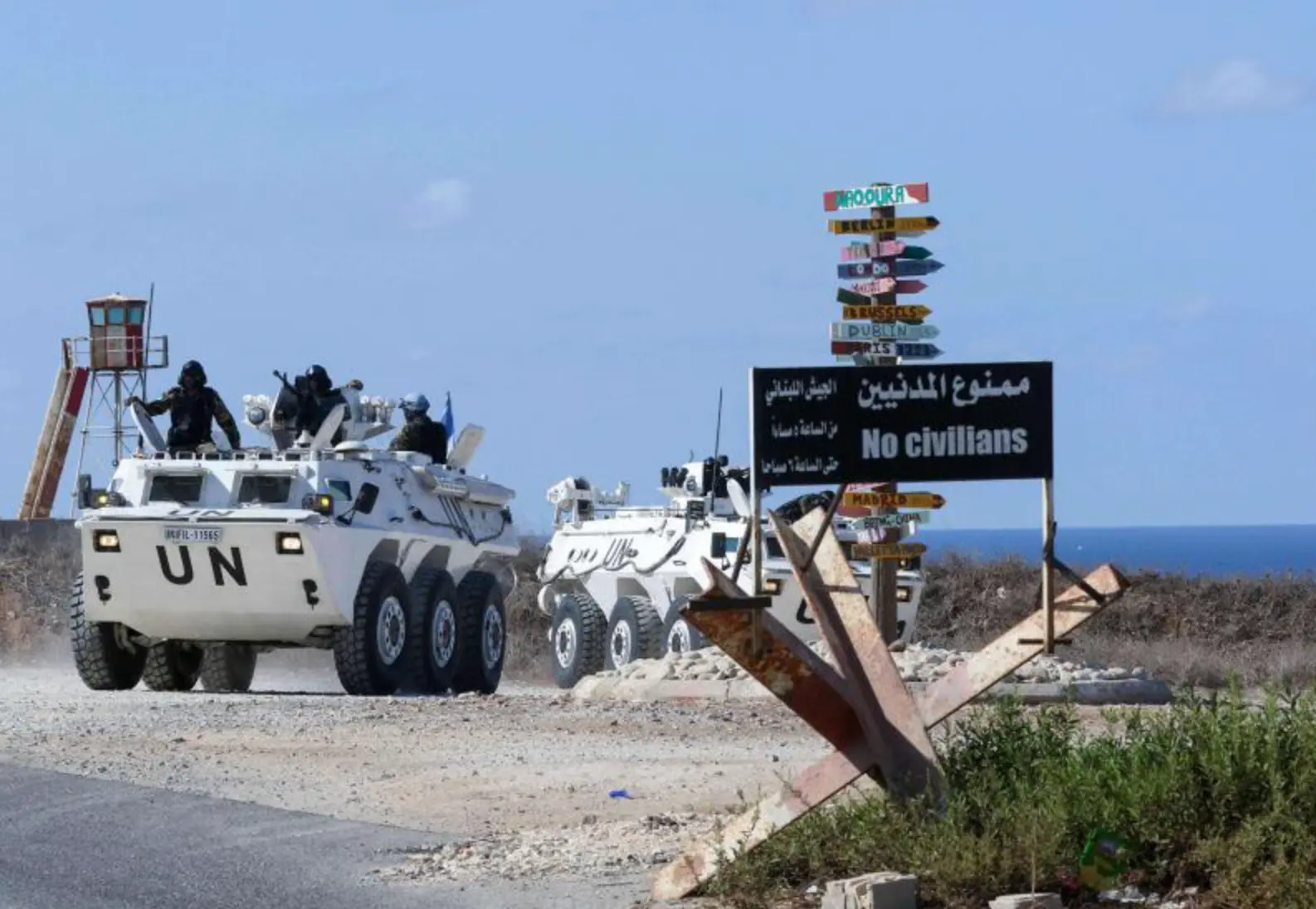
At the same time, Hezbollah gives Iran something broader than deniability. It gives Iran reach. Through Hezbollah’s position in southern Lebanon, Iran can extend pressure toward Israel’s northern border without physically moving Iranian forces into that space. That matters because geography is never neutral in conflict. Where a group is positioned, what border it can threaten, and how quickly it can respond all shape how states calculate risk. Hezbollah’s weapons, organization, and operational experience create a real security concern for Israel and other regional actors because the group is not just symbolic. From Iran’s perspective, this strengthens deterrence because any action taken against Iran has to be weighed against the possibility that Hezbollah could respond from Lebanon. In that way, Hezbollah functions almost like forward strategic depth, giving Iran an external pressure point that makes direct action against it harder to calculate and more dangerous to carry out. This is why Hezbollah’s value cannot only be measured by whether it attacks at a specific moment. Its presence alone changes the environment. It forces Israel and other actors to think about another front, another layer of escalation, and another set of consequences.
The strength of this strategy comes from its flexibility, but that same flexibility also creates real dangers. Iran can rely on Hezbollah to apply limited pressure, send a political message, or escalate more aggressively depending on the situation. That is one of the main reasons proxy warfare is so useful in a tense regional environment. It gives a state room to compete without immediately crossing into open war. At the same time, Hezbollah’s value is not only based on military force. Its political position and social influence inside Lebanon give Iran a deeper connection to Lebanese institutions, local communities, and everyday power structures. That makes the relationship more durable than a basic military partnership. Hezbollah is not just an extension of Iran that can be controlled perfectly from the outside. It has its own leadership, local interests, domestic pressures, and survival concerns inside Lebanon. Because of this, Hezbollah can take actions that create problems Iran may not fully control or may not have advocated. for in the first place. A proxy can expand a state’s influence, but it can also pull that same state closer to escalation once events start moving quickly. So, while Hezbollah gives Iran a practical way to compete with Israel, deter rivals, and maintain regional influence, it also exposes the trade-off built into proxy warfare itself. It creates reach and flexibility. But it also creates uncertainty, and once escalation begins, that uncertainty becomes much harder to manage.
Consequences and Limitations of Proxy Warfare
Although proxy warfare gives Iran strategic advantages, it also contributes to regional instability that becomes far more difficult to control. By operating through various non-state actors, conflicts begin to no longer confine clear state boundaries, but instead spread across multiple regions and actors simultaneously. This creates a kind of conflict environment where violence can continue without ever becoming a formally declared war. In Hezbollah’s case, this is especially clear. Its role inside Lebanon, its involvement in Syria, and its connections to other Iranian-backed groups all help to create a wider network of instability that is not limited to one state or one battlefield. It keeps conflict going by allowing different actors, with different interests, to remain involved over longer periods of time. Once that happens, the conflict becomes harder to manage because power is spread across multiple groups, regions, and objectives. There becomes a circumstance where no simple endpoint and no single actor is capable of fully controlling where the conflict goes next, which makes resolution far more difficult as the conflict becomes decentralized, adaptive, and harder to contain.
At the same time, proxy warfare also deepens the security dilemma that already exists in the region. As Iran expands its influence through Hezbollah and other proxy groups, surrounding states are going to view that expansion as a threat to their own security. From their perspective, Iran is not just defending itself; it is building safeguards and additional pressure points across the region. That response eventually leads to more military spending, preemptive strikes, and in some cases, the development of competing proxy networks. So, what begins as a strategy meant to increase Iran’s security can end up creating more insecurity for everyone who is actively involved. It may help a state avoid direct war in the short term, but it also creates a cycle of mistrust and escalation that becomes much harder to stop over time. With all these back-and-forth confrontations, it never seems to be a clear projected end goal or prospective peace within the region. Instead of increasing Iran’s long-term security, these actions contribute to that same cycle of escalation where each side continuously reacts to the other. What this creates is a defensive strategy that quickly evolves into a competitive buildup of power, reinforcing mistrust across the region. Thus, creating an environment where proxy warfare never truly avoids the security dilemma, but instead, it actually expands it, constantly pulling in more actors into the same cycle of tensions and responses.
Proxy warfare also creates real problems for traditional counterterrorism. These groups are not always easy to separate from the civilian populations around them, and they still maintain some level of independence from the states that support them. That makes them much harder to target through conventional military strategy, especially in places like Lebanon and Syria, where intelligence gathering and precision strikes are already difficult. This is important because direct attacks against proxy groups often lead to further civilian casualties, which only creates more instability and gives outside actors more reasons to respond or retaliate. At the same time, proxy warfare blurs the line between state and non-state actors. Also, making accountability much harder to determine. If a proxy group carries out an attack, the state supporting it can deny responsibility, while still benefiting from the overall outcome. This creates a gray area where enforcement becomes weaker, and counterterrorism becomes far less effective. Weakening one group does not automatically destroy the larger network around it, and it definitely does not remove the conditions that allowed that group to operate in the first place.
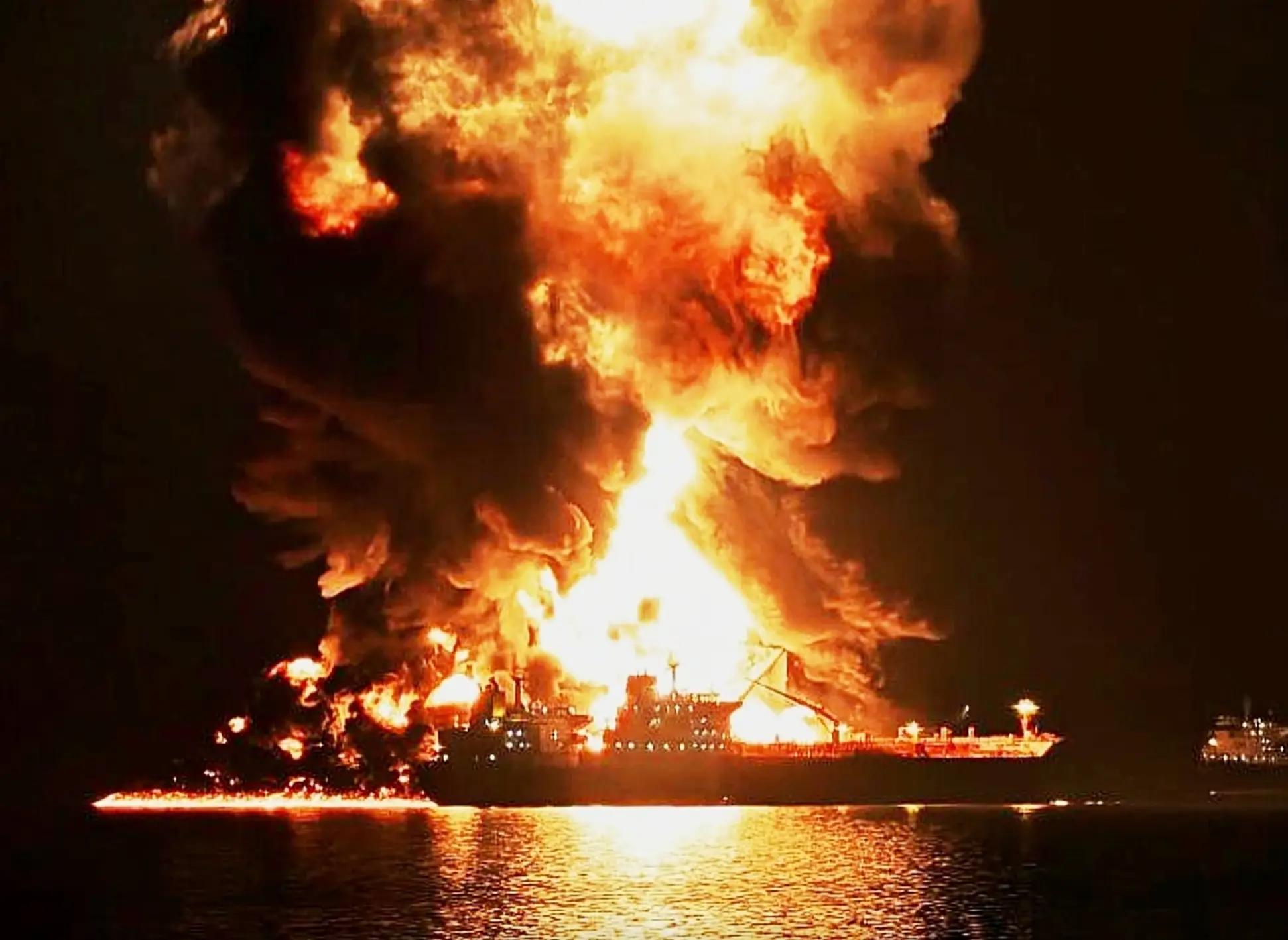
Finally, one of the biggest limitations of proxy warfare is the overall risk that states eventually lose control over the very groups they helped empower. States usually support proxies because they want to achieve certain strategic goals without taking on the full cost of direct conflict. But these groups are not just tools or operational advantages. They have their own leadership, priorities, ideology, and military interests. Hezbollah is a strong example of this because, while it receives support from Iran, it also has its own internal structure and decision-making process. In a region where tensions are already high, even one miscalculated attack can trigger a much larger conflict that neither side originally wanted. The 2026 U.S.-Iran escalation shows just how quickly a regional confrontation can move beyond military targets and start affecting global economic systems. As tensions around Iran increased, disruptions in the Strait of Hormuz showed how conflict involving Iran can quickly impact global oil flows and energy prices. This is where proxy warfare becomes especially dangerous. It is supposed to reduce risk for the state using it, but in reality, it often creates a new level of unpredictability. In my view, proxy warfare may be useful for managing conflict in the short term, but it also creates long-term risks that can eventually move beyond the control of the state that started the process in the first place.
Analysis and Insights
After studying Iran’s use of Hezbollah and its broader proxy network, realism helps explain much of the logic behind these decisions. Iran’s actions on the surface can appear ideological, aggressive, or destabilizing, but those explanations alone do not fully account for why proxy warfare has become such a major role in Iran’s regional strategy. Realism helps give structure to behavior that might otherwise seem random at first or purely ideological-based because it focuses on how states pursue security, power, and survival in an anarchic international system. From this perspective, Iran’s support for Hezbollah is not only about spreading revolutionary ideology or religious influence, but also about building deterrence, creating buffers, and maintaining leverage against stronger adversaries such as Israel and the United States. This matters because it shifts the main question from asking why Iran supports Hezbollah ideologically to what Hezbollah actually allows Iran to do strategically.
The larger insight I found from this is that Hezbollah should not be viewed only as a Lebanese militant organization or even only as an Iranian-sponsored group, but instead, Hezbollah represents one of the clearest examples of how a state can use a non-state actor to expand its own influence without ever having to engage in direct conventional warfare. Through Hezbollah, Iran can continue pressuring Israel, strengthen its position near Israel’s northern border, maintain influence in Lebanon, and raise the potential cost of any direct attack against itself. In my view, this fits closely with realism because states often look for ways to expand their power while limiting their own exposure. Iran’s use of Hezbollah directly reflects this circumstance and gives Iran a reach beyond its own borders but does so in a way that avoids many of the risks that would naturally come from direct state-to-state conflict. If Iran had direct warfare with Israel or the United States would be too costly, then proxy warfare gives Iran a way to compete indirectly while avoiding the full military, political, and economic consequences of open confrontation. We see the economic warfare happening today between the U.S.-Iran war and how much of a toll this conflict has taken on the country's domestic influence.
At the same time, realism also shows us why Hezbollah became more than an isolated partnership with Iran. Hezbollah became a blueprint for how Iran can deploy broader regional power by using proxy strategies. Building its interrelationship with Hezbollah, Iran also began expanding this model of indirect influence outward towards other areas of the Middle East by helping support militias and armed groups in Iraq, Syria, and Yemen. These groups operated in many different political environments, but they still reflect the same broader strategy, where projecting power beyond Iran’s border was essential while still aiming to minimize any form of risk. The “so what” here is important because, if Hezbollah was the original proxy model, then Iran’s proxy strategy should not be treated as a series of disconnected relationships but instead be understood as a regional system of influence that had developed over time. Iraq, Syria, and Yemen each demonstrate just how Iran adapted the Hezbollah model to different regional environments. In Iraq, the 2003 U.S. invasion and the collapse of Saddam Hussein’s regime created a power vacuum that Iran was able to exploit through relationships with Shia political and militant actors as well. This marked a shift from relying on just a singular proxy relationship to supporting multiple armed groups within a single state. In Syria, during the 2011 Civil War, the survival of Bashar al-Assad’s regime was strategically necessary to stay alive because Syria helped provide Iran with a major ally and a geographical link to Hezbollah in Lebanon. By supporting Assad through the IRGC, Quds Force, Hezbollah, and other militia networks, Iran turned proxy warfare into an almost outside army of coordinated regional fighters, resources, and influence across Iraq, Syria, and Lebanon. Yemen also shows a more flexible version of this proxy model because Iran’s relationship with the Houthis was less direct and less institutionalized than its relationship with Hezbollah, but it still gave Iran major leverage against Saudi Arabia and influence near the Red Sea, which held important trade routes for the Middle Eastern countries. Together, these cases go to show just how Iran’s proxy strategy never required every group to act or look like Hezbollah. Instead, Iran adapts proxy relationships to better fit local conditions, using instability, weak institutions, and regional rivalries to create pressure points against its adversaries while avoiding all the costs of attacking by itself.
The broader implication that proxy warfare holds is not only an Iranian strategy; it also helps to reflect a larger pattern in modern international politics where states use non-state actors to compete below the thresholds of direct warfare. This has implications far beyond Iran itself because it suggests that future conflicts may become more fragmented, indirect, and difficult to resolve in a timely manner. If states can go ahead and just use proxies instead of their own military to pressure rivals while avoiding full accountability, then conventional ideas of war and peace become harder to define and represent. This directly complicates diplomacy, deterrence, counterterrorism, and conflict resolution because the sponsor, the proxy, and the battlefield itself become entangled in the same political and military environment. However, realism also has its own limitations. While it helps explain why Iran chooses proxy warfare, it does not help to explain how these relationships evolve once the proxy develops into its own identities, political structures, and local interests. Hezbollah is not just an Iranian weapon or tool; it is also a Lebanese political actor with its own leadership, social base, ideological commitments, and domestic priorities now. This matters because proxy warfare is never as clean or controllable as it seems on paper from a purely state-centered perspective, but instead can be seen as a support for strategic reasons. Hezbollah can also act on its own accord. Creating further risks of escalation, miscalculation, and actions that may not fully align with Iran’s preferred strategy, thus making Hezbollah a far different organization than it once was in the early 1980s.
The main takeaway from all of this is that proxy warfare gives states room to maneuver, but it also creates risks that are never fully contained. Iran’s use of Hezbollah shows this clearly. On one hand, Hezbollah allows Iran to deter adversaries, expand regional influence, and compete without paying the full costs of direct war. That is why these kinds of strategies make sense from a realist perspective. At the same time, it also creates serious problems. Accountability becomes blurred, conflicts last longer, and local violence can turn into something much larger than the original calculation. This matters because Hezbollah cannot be understood only as a terrorist organization or just another Iranian-backed group. Those labels may explain part of the relationship, but they don’t explain the entire strategy behind it. Hezbollah is a case study in how modern states adapt to an international system where direct war is expensive and dangerous, but the competition for power continues anyway.
Ultimately, Iran’s proxy strategy shows a broader reality about modern conflict: states no longer have to rely only on conventional armies, formal invasions, or direct confrontation to project power. Instead, they can work through armed networks, local militias, political movements, and social institutions that already exist inside unstable regional environments. This matters because it changes how power is actually exercised in the international system. Iran’s use of Hezbollah, and later its relationships in Iraq, Syria, and Yemen, go to show that proxy warfare is not some temporary exception to normal state behavior. It has become a practical strategy for states that want influence but want to avoid the full military, economic, and political costs of open war. From my perspective, this is the larger lesson behind Iran’s model. As long as states face stronger rivals, regional insecurity, and the risks that come with direct state-to-state conflict, proxy warfare will remain an attractive option. But it also creates the same problem that appears throughout this analysis: the strategy gives states flexibility and reach, while also making conflict harder to control, harder to resolve, and easier to spread beyond its original purpose. This is what leads directly into the Iran-Hezbollah relationship, because Hezbollah is not only one example of Iranian sponsorship, but one of the clearest examples of how modern power is being shaped through indirect forms of deterrence, pressure, and influence.
Conclusion
Iran’s relationship with Hezbollah ultimately shows that modern states’ power is no longer limited to their armies, borders, or direct confrontation. What stands out to me the most about the Iran-Hezbollah relationship is that it cannot be fully explained by ideological or religious circumstances alone. In my view, Iran’s support for Hezbollah makes the most sense when it is being looked at through the lens of realism. States care about their survival, and they care about influence, leverage, and protecting themselves in a system where no higher authority can fully guarantee one’s security. Iran has used Hezbollah within that reality, not randomly, and not just emotionally, but strategically. This matters because Hezbollah gives Iran something that a normal military strategy can’t always provide. It gives Iran reach outside of its own borders, pressure against stronger enemies, and a way to project its power without always paying the direct costs of conventional warfare. Instead of confronting Israel or the United States directly in every situation, Iran can operate through Hezbollah in a way that creates distance and uncertainty. That distance is incredibly important, and gives Iran a sense of plausible deniability, regional depth, and an advancing position near Israel, all while allowing Iran to compete in the Middle East without fully crossing into direct state-to-state conflicts. From this perspective, Hezbollah becomes more than just another ally, but instead part of Iran’s broader security strategy. So, in the end, the Iran-Hezbollah relationship is not only a case of state sponsorship; it is a window into how power, deterrence, and conflict are evolving rapidly in the modern international system.
Resources & Archival References
Bibliography
- ResearchGate link for pdf download
- The Strait of Hormuz Crisis: How the U.S.–Iran Conflict Is Disrupting Global Oil Supplies
- Towards Proxy Agency and the Study of Proxy Autonomy
- Introducing Realism in International Relations Theory
- Iran Proxy Warfare and Middle Eastern Conflict
- The Changing Geography of Terrorism
- Why Winning in War Is Hard
- DOI Source on Conflict / Terrorism Studies