WHAT WASHINGTON KNEW AND WHAT IT CHOSE
Intelligence, Covert Action, and the Judgment of Operation AJAX
by Tobin Albanese
Geopolitics Wed Oct 21 2026
The success of an intelligence operation does not necessarily mean every decision behind it was justified. Operation AJAX raises a broader question about how governments should weigh uncertain threats, strategic interests, and the consequences of intervening in another country's political future.

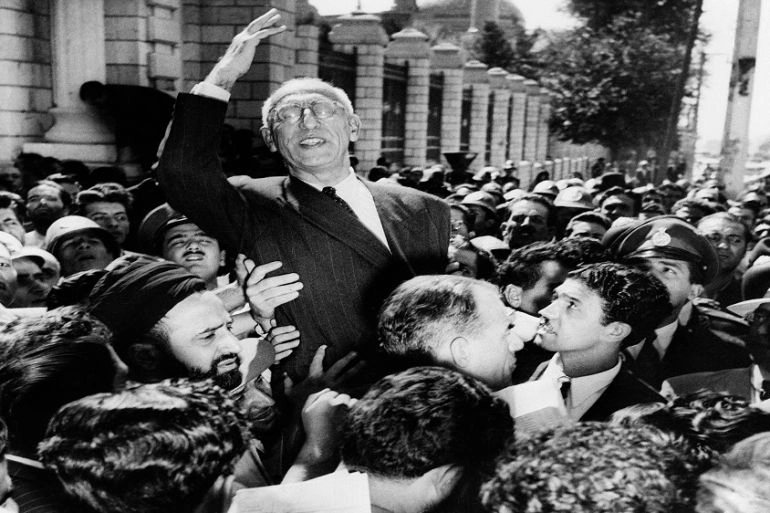
By 1953, Iran was facing a combination of political instability, economic pressure, and growing international competition that had placed the country at the center of several overlapping conflicts. Prime Minister Mohammad Mossadegh’s efforts to establish Iranian control over the country’s petroleum resources had created a serious dispute with Britain, while growing political divisions between the monarchy, the government, and various opposition movements continued placing pressure on Iran’s political institutions. At the same time, the presence of the Tudeh Party introduced another concern for the United States, especially when the possibility of further Soviet expansion was already influencing American foreign policy during the early Cold War. These circumstances were not entirely independent of one another either. Economic pressure could further weaken political institutions, domestic opposition could threaten Mossadegh’s ability to govern, and continued instability could eventually create opportunities for political movements whose interests were considerably different from those of the United States. For American policymakers, determining which of these concerns required immediate attention and which represented potential threats was not necessarily a straightforward decision to make. By August 1953, Washington had moved toward supporting a covert intelligence operation intended to remove Mossadegh from his position as Prime Minister. However, understanding why American officials believed intervention had become an acceptable course of action further requires examining the circumstances that fundamentally led them to make that decision in the first place.
One of the central questions guiding my research on Operation AJAX is the extent to which American intelligence assessments influenced the foreign policy decisions being made in Washington. The United States had spent considerable time pursuing diplomatic negotiations, economic assistance, and attempts at finding an acceptable settlement over Iranian oil, yet the possibility of covert intervention had gradually become part of the discussions surrounding Mossadegh’s government. This paper examines how American officials moved between these different approaches, particularly when concerns about Iran’s political future did not always align with what intelligence analysts believed was likely to occur. This raises another research question regarding whether policymakers should respond only to demonstrated threats or also consider the possible consequences of allowing political instability to continue. At the same time, the CIA was preparing an operation intended to influence the very political conditions its intelligence analysts were attempting to assess. This relationship between intelligence, operational planning, and foreign policy decision-making raises an even broader question: How did American intelligence assessments influence the decision to carry out Operation AJAX, and to what extent should its operational success be considered sufficient evidence of a successful and justified foreign policy decision?
Throughout this paper, I examine Operation AJAX as more than just an intelligence operation that successfully removed Mossadegh from power. There were considerably more factors involved in the decision to intervene, especially when considering the competing intelligence assessments, Iran's own political instability, and the uncertainties that American officials were facing throughout the operation. Given the circumstances confronting American policymakers in 1953, this paper argues that Operation AJAX was ultimately an operational success and a defensible foreign policy decision. However, achieving the intended outcome does not automatically justify the methods used throughout the operation’s planning and implementation, nor should its longer-term political consequences be disregarded. Understanding these distinctions requires examining why Washington eventually considered intervention an acceptable option, the role Iranian political actors played in its outcome, and how much actual control American officials possessed once the operation began unfolding beyond what was originally anticipated. However, before examining these developments individually, it is important to consider how historians have interpreted the circumstances surrounding Mossadegh’s removal, particularly where their explanations of American and British motivations, the threat of communist expansion, and the eventual success of the operation begin to differ.
II. Literature Review
A central disagreement surrounding Operation AJAX is not simply whether oil, communism, or political instability mattered most, but rather, how these pressures became connected directly within American decision-making. Traditional interpretations have often treated Cold War fears and control over Iranian oil as competing explanations for pushing towards a coup, yet the scholarship increasingly suggests that the two cannot be separated as singular justifications. Azizi questions whether fear of communist expansion should be treated as the dominant explanation over concerns surrounding the nationalization and Iranian control over its petroleum resources. This shift from Truman’s administration to Eisenhower’s did not ultimately create an entirely new set of American objectives. What changed more clearly between the two administrations was the clear willingness to accept covert action as a viable response once diplomatic negotiations with Mossadegh appeared increasingly unlikely to produce an acceptable outcome. Treating these motivations as separate entities makes the decision-making process appear much simpler than it was. With Iran’s economic deterioration, growing political instability, and the possibility of communist expansion became mutually reinforcing concerns that narrowed the range of policies Washington had believed remained viable options.
The oil crisis was clearly a central point to understanding the relations between the state’s governments and the Mossadegh regime, although the literature still disagrees over whether oil itself was the primary reasoning of Washington finally authorizing his removal. One interpretation that connects these competing concerns is what Gregory Brew describes as the “collapse narrative.” Rather than treating oil, political instability, and communist expansion as separate problems, Brew argues that American policymakers increasingly viewed them as part of the same progression, where the continued failure to restore Iran’s oil revenues could worsen economic conditions, weaken the government, and eventually create greater opportunities for communist influence. Within this framework, Brew argues that British support for Mossadegh’s removal emerged relatively early during the oil nationalization crisis. However, the United States remained more hesitant on any covert actions to take place inside Iran and continued pursuing a diplomatic settlement through most of the Truman administration.
However, the National Security Archives give us further insight to the discussions between the United States and what the UK had fundamentally discussed. By late 1952, the British government had moved beyond frustration and was actively pressuring Washington to consider a complete regime change. A November 1951 State Department memorandum recorded that the British Foreign Office was prepared to support a coup replacing Mossadegh with, in their own words, a more “reliable” government if the United States agreed to cooperate. The same memorandum connects this positioning that there was “virtually no prospect of an oil settlement with Mossadegh”and showed that the British felt Mossadegh’s government could not prevent an eventual communist takeover. These exchanges are important because they bring further insight as to whether the decision of a later covert action was not the product of an already Anglo-American policy, but rather of a gradual convergence between British demands for removal and American concerns about the consequences of continued instability.
The connection between economic deterioration and the fear of communist expansion is where Brew’s collapse narrative becomes especially important. Rather than isolating oil and communism as competing explanations, Brew argues that American policymakers increasingly viewed them as part of the same progression. Without the restoration of oil revenues, Iran could face deeper economic strain, growing political instability, and eventually a greater opening for the Tudeh party and Soviet influence. The concern was therefore anticipatory. Washington was not only aiming to respond to pre-existing conditions in Iran, but to what officials believed those conditions could eventually produce. This is where the intelligence dilemma becomes much more important than diplomatic resolutions. Gasiorowski complicates this reasoning by drawing a stricter distinction between a serious communist organization and an imminent communist takeover. Gasiorowski approaches this threat somewhat differently by questioning how close the Tudeh Party actually was to gaining political control over Iran. Although the party maintained an established political presence, his examination suggests that its influence had not developed to a point where a communist takeover appeared likely during the early months of 1953.
Marsh’s perspective adds another layer of nuance by challenging the idea that Eisenhower marked a complete reversal of Truman’s policy goals. Rather, Eisenhower inherited a narrowing set of options in which many less drastic approaches had already failed or been pushed aside. Both administrations still agreed on several underlying objectives where Iran remains outside of Soviet control, an oil agreement that was viable, and Iranian instability could not be simply ignored. From this perspective, Operation AJAX was less a product of a newly discovered threat than the culmination of pre-existing assumptions that had gradually narrowed the alternatives Washington believed remained available. The more revealing question of the literature, then, is not which single motive had prevailed, but how these assumptions converted a broader concern over Iran’s future into a progressively narrow policy framework. That showcase of justification places the actual strength of the Tudeh Party at the center of the next debate, because the justification for intervention depended heavily on whether communist expansion represented an immediate danger or a longer-term possibility projected forward by American officials and the apparatus behind pushing communist like ideals out of Iran.
This winnowing of alternatives and the perspectives given to the public by the National Security Archives of U.S. and British intelligence acquisitions surrounding communist expansion, renders a stark disparity between Anglo-American perceptions of communist expansion and the actual institutional strength of the Tudeh Party. The central point being, is whether the party represented an immediate threat to the Iranian state or a longer-term vulnerability that continued instability could potentially intensify. Since the Tudeh Party was already an organization that was previously examined. Brew argues that Operation AJAX was aimed at preventing Iranian collapse, whereas Gasiorowski approaches this similar issue by further examining what American officials believed the Tudeh could fundamentally carry out.
The concern was not entirely speculative as well. The U.S. reporting described the party as disciplined, politically organized, and influential among students, civil servants, and portions of the armed forces. Its ability to organize multiple large demonstrations also showed a visible presence and unique mobilization in Iran. By late 1952, the Central Intelligence Agency (CIA) had assessed that Tudeh “almost certainly” was incapable of seizing power, while the November National Intelligence Estimate came to a similar conclusion. A conclusion that the party would likely remain too weak to take full control during the Iranian political atmosphere in 1953. This contradiction continued into the Eisenhower administration as well, where some officials feared Mossadegh might become increasingly dependent on communist support, while other CIA affiliates described him as an individual best suited to fight against the growing Soviet influence at the time. The dichotomy between political vulnerability and immediate capability therefore becomes too difficult of a problem to ignore as well. Taken these accounts together, the literature suggests that the Tudeh Party represented an authentic source of political vulnerability, but the immediacy of that threat remained less certain than the policy analysis eventually applied. The central issue therefore becomes whether American officials were responding to demonstrated communist capabilities or increasingly treating a plausible future vulnerability as sufficient justification for immediate intervention.
If the threat itself remains disputed between different perspectives, the next question becomes how much of the coup’s eventual success should be attributed to CIA direction and how much depended on Iranian actors pursuing their own political objectives. Koch’s analysis on internal CIA history attributes significant analytical weight to the efficacy of American officials’ true coordination by showing the Agency organized political contacts, propaganda efforts, military assets, and support for various forces who opposed Mossadegh. While this assessment positions the CIA as a fundamental catalyst in establishing the structural conditions necessary for Mossadegh’s removal, it simultaneously highlights a critical tension regarding the pedigree of agency that American planners exerted over local Iranian actors. Within these efforts, Azizi approaches the same problem from a broader perspective by arguing that local actors should not be treated simply as extensions of a superpower’s political decisions, but as political forces pursuing objectives of their own. The latter interpretation places a greater analytical weight on the roles of military officers, royalists, and political opponents of Mossadegh who had their own reasons for supporting his removal of power.
A closer examination beyond a predominantly CIA-centric framework brings the role of domestic Iranian participation into sharper focus and complicates any interpretation of Operation AJAX as a product of American objectives alone. Azizi’s broader bottom-up approach to the Cold War treats local actors within Iran as political participants capable of shaping outcomes according to their own desired interests, rather than as mechanisms of outside powers pursuing strategic objectives. Acknowledging Iranian agency complicates any attempt that can attribute the operation’s success or failure solely to American planning since the effectiveness of CIA coordination still depended on political actors whose motivations were not fully controlled from Washington. The operation’s effectiveness therefore rested not only on American planning, but on the ability of that planning to intersect with political divisions and competing interests already present within Iran. This weakens any interpretation of Operation AJAX as a purely controlled projection of American power and raises a broader question over how far operational success can be separated from the political consequences that followed. Once the removal of Mossadegh is separated from the longer-term political order that emerged afterward, the definition of “success” becomes considerably less straightforward than immediate mission accomplishments would have suggested.
The final major disagreement concerns not whether Operation AJAX achieved its immediate objectives, but whether the removal of Mossadegh should be treated as sufficient evidence of broader strategic success. Koch’s contemporaneous assessment shows that American officials initially viewed Operation AJAX through a relatively narrow measure of success. Mossadegh had finally been removed, Fazlollah Zahedi’s successor government was established, prospects for resolving the oil dispute were seen as improving, and Iran remained aligned within the Western orbit at a time when Washington remained deeply concerned over political instability and communist expansion. By these immediate perspectives, the operation had appeared to have accomplished what American policymakers had intended. The problem becomes whether those standards were sufficient for determining success beyond the immediate outcome of the coup.
Koch’s historiographical assessment complicates the overall judgment of Operation AJAX by shifting the evaluative standard away from an immediate mission accomplishment and rather towards the political order that had followed after Mossadegh’s removal. Later interpretations by Gasiorowski and Brew placed greater weight on the strengthening of the Shah, the contraction of representative political orbits, and the enduring association of the United States with Iran’s post-coup political atmosphere. Although, Koch also cautions against treating the Islamic Revolution as a predetermined consequence of intervention in 1953, or the underlying causation of actions that had later taken place. This distinction of literature brings greater insight to explore the historiographical disagreement being temporal as much as it is weighted politically. An operation that appeared highly effective while being measured against immediate objectives could produce a far more ambiguous record once legitimacy, durability, and unintended consequences are incorporated into the assessment.
Azizi’s broader perspective and emphasis on sovereignty and indigenous political agency reinforces this overall problem by showing that the coup cannot be evaluated solely through the strategic objectives of Washington and London, while Brew’s collapse narrative showcases how those same objectives had already been shaped by anticipatory assumptions about instability, oil, and communist expansion. Exploring competing narratives together, these debates move the research beyond any singular explanation as to why Operation AJAX had occurred. They instead expose a broader analytical problem surrounding how threats were interpreted, how policy alternatives became progressively constrained, how far American officials could actually control the political forces they had finally mobilized, and what standards should be used to judge whether the covert action was a broader success or the wrong action to take in Iran’s political atmosphere. Operation AJAX therefore matters for more than just the removal of Mossadegh alone. What stands out is the growing distance between immediate operational effectiveness and the strategic consequences that had eventually followed the decisions to intervene. Ultimately, the value of Operation AJAX as a measure of covert-action success depends less on what it accomplished in August of 1953 than on whether those immediate gains remained defensible once their long-term political consequences came to view.
III. Iran’s Political Crisis and Indigenous Actors
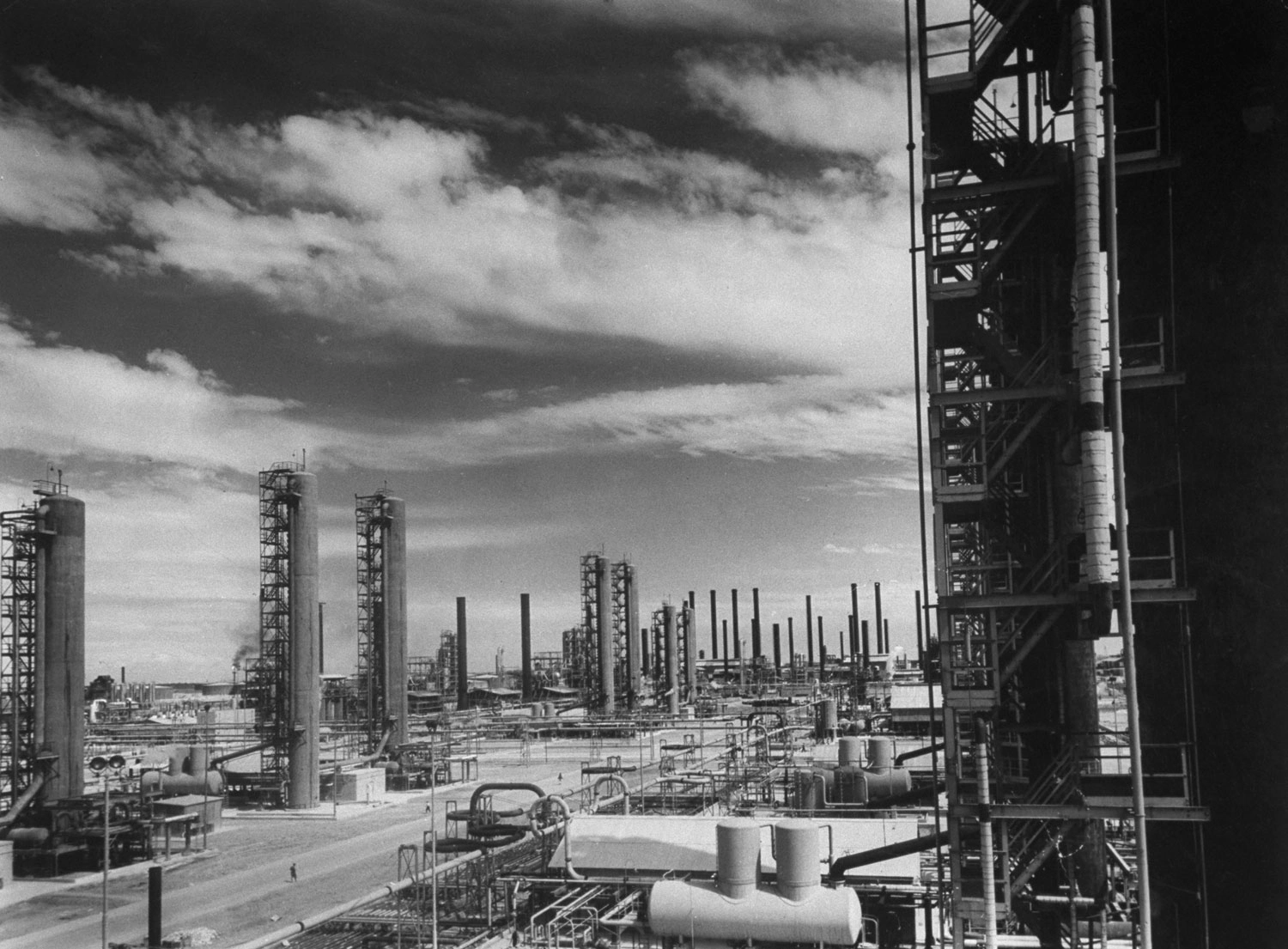
Before discussing the domestic political actors that helped make Operation AJAX possible, it is important to understand how and why the indigenous nationalist movement that placed Iran’s oil dispute at the center of its political crisis in the first place. For decades, the Anglo-Iranian Oil Company (AIOC) maintained a substantial control over Iranian petroleum through agreements that largely protected British commercial and strategic interests. Even with the renegotiation of the original 1901 D'Arcy concession in 1933, which provided Iran with better financial terms and reduced the territory covered by the agreement, Britain still maintained long-term access to Iranian oil. Even though, Iran had received greater financial compensation and a reduction of territory covered by the concession, Iran still lacked meaningful control over its own natural resources. This distinction became increasingly important under Mossadegh’s nationalization program in 1951, which aimed at reclaiming the authority over resources and further reduce the influence of foreign interests over Iran’s economic structures.
However, after nationalization, Britain responded through an economic embargo and restrictions on Iranian oil exports. This oil embargo had placed considerable pressure on the Mossadegh government which depended heavily on these petroleum revenue streams to upheld his political shifts and Iran’s future strategic goals on the global political scene. Without reliable access to international markets, Iran faced declining state revenue and growing economic difficulties that further weakened Mosaddegh’s political positioning. Nationalization was the intention of strengthening Iranian sovereignty; however, the economic consequences of British opposition made that goal increasingly difficult to achieve. At the same time, Iran’s political instability cannot be explained through British pressure alone, since disagreements over political authority and Mosaddegh’s leadership were already developing within the country. British economic pressure therefore becomes important in assessing how far external economic measures contributed to the instability that American and British officials later cited when justifying further intervention. These economic conditions are important because they helped create additional pressures on Iran’s political institutions, shaping how domestic actors would respond to the crisis and the eventual confrontation surrounding Operation AJAX.
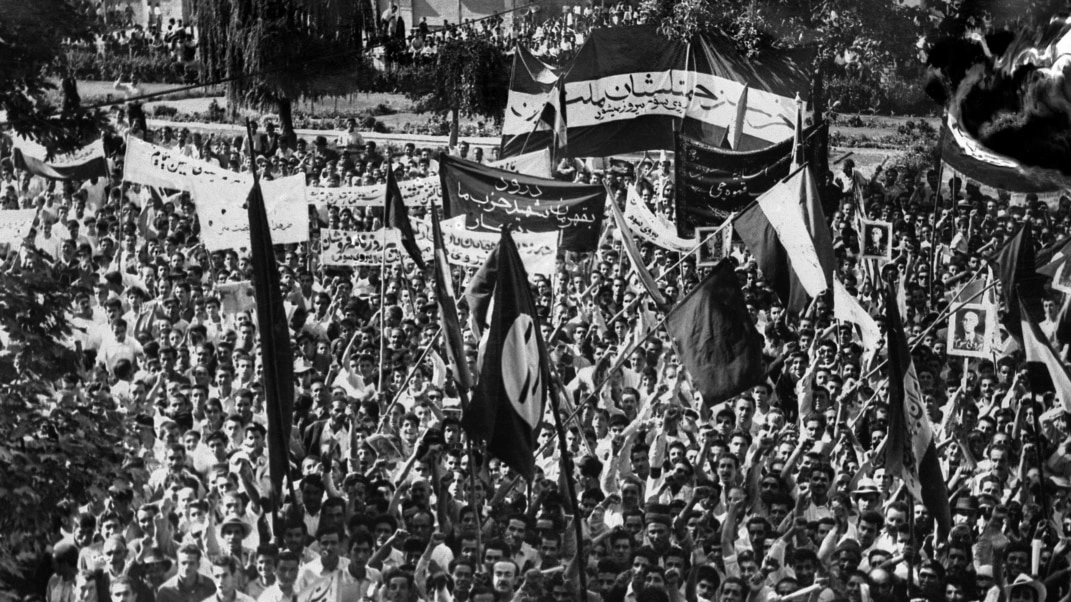
The economic pressures that surrounded Iran’s nationalization crisis was not the only limiting factor contributing to the political instability that helped build the foundations of Operation AJAX. Within Iran itself, the political structure was already divided between competing institutions and individuals who held different expectations for how the country should ultimately be governed. At the center of these disagreements was Prime Minister Mossadegh and the National Front, whose nationalist movement was gaining rapid support for their opposition towards foreign control over Iranian oil. However, support for nationalization does not mean cooperation or shared interests while regarding the distribution of political authority. One of the clearest examples was Mossadegh’s deteriorating relationship with Mohammad Reza Shah Pahlavi over the constitutional authority of the monarchy and control of the military leadership at the time. These divisions were not only between monarchy and parliament. Religious leaders were heavy factors within this division, especially within bazaar networks, royalist supporters, and conservative politicians who held political influence that did not always align with Mosaddegh’s government. Individuals such as Ayatollah Abol-Qasem Kashani, who originally supported the nationalist movement, became divided from Mossadegh over political and social issues. At the same time of all these underlying competing influences, there were still military officers and conservative figures like General Fazlollah Zahedi who held their own interests in opposing the prime minister and recovering influence within the Iranian state.
This circumstance within Iran may seem like a British versus Mosaddegh governmental disagreement on paper, there was real instability within multiple different factions within Iran’s political orbit who were all competing for their own governmental ideals. Clarifying these matters because domestic opposition was not a single unified movement, with different actors opposing Mossadegh for different reasons, whether those concerns involved constitutional authority, political influence, religious ideation, or the future direction of Iran’s government. British and American intelligence could therefore operate within one of these existing relationships and political networks rather than having to create an entirely new source of opposition themselves. The number of competing political actors also complicated Washington’s efforts to identify a reliable political alternative whose interests could remain aligned with broader Western objectives. The Eisenhower administration had to carefully balance immediate risks against the longer-term possibility for the future of both Iran and the Middle East at the time.
Another important actor within Iran’s political environment during this period was the Tudeh Party. The Tudeh was a communist organization that represented both an established political force within Iran and a growing concern for Western policymakers. In fact, the growing concerns surrounding the Tudeh Party were one of several factors contributing to the differences in how the Truman and Eisenhower administrations approached Iran. The party maintained networks among workers, students, and portions of the Iranian military, creating fears that continued instability could eventually strengthen Soviet influence. However, removing Mossadegh without establishing a stable political alternative also carried its own risks, since further instability could potentially create additional opportunities for the Tudeh Party. However, the existence of an organized communist movement did not necessarily translate into the capability to overthrow Mossadegh or immediately establish a communist government, a distinction reflected in the internal discussions between British and American State Department officials. These multiple perspectives foreshadow a distinction between communist influence, and an immediate communist takeover. A distinction that became an extremely important factor when discussing the perception of the U.S. government and its continuing actions within the Iranian state. Iran’s domestic political environment was obviously unstable. However, the instability alone does not establish that Soviet control was on the verge of an inevitable outcome. Understanding these competing political interests are important when looking back on Operation AJAX that ultimately depended on the intersection between foreign intelligence coordination and Iranian actors whose political objectives were already pushing them into conflict within Mossadegh’s government.
The political divisions developing within Iran also created opportunities for British and American intelligence to further establish relationships with domestic actors who already held their own interests in removing Mosaddegh from power. This was expressed earlier with General Fazlollah Zahedi, Mohammad Reza Sha Pahlavi, and several military officers represented important sources of opposition, although their political objectives aligned indirectly to those of Washington or London. For Zahedi and royalist supporters, removing Mosaddegh offered an opportunity to recover political influence and further strengthen the monarchy’s position back into the Iranian state. At the same time, clerical leaders, bazaar networks, and conservative politicians held their own concerns over Mosaddegh’s leadership and the direction of Iran’s political future. These existing relationships, alongside newspaper and propaganda contacts, provided foreign intelligence services more opportunities to influence political opposition without having to establish their own entirely new networks. However, even within these networks did not mean that American officials could fully control the decisions or underlying motivations of the Iranian actors they were actively supporting. Operation AJAX depended on more than the justification of individuals willing to oppose Mosaddegh. It also required American and British officials to determine which political relationship were reliable, what these individuals expected to gain, and whether their interests would remain aligned throughout the entirety of the operation and thereafter. Understanding these indigenous participants and competing objectives therefore raises a broader question about how American policymakers assessed Iran’s political instability, interpreted the reliability of domestic opposition, and ultimately determined that covert intervention was an acceptable response to the overall crisis at hand.
IV. U.S. Policy Goals and Intelligence Construction of the Threat
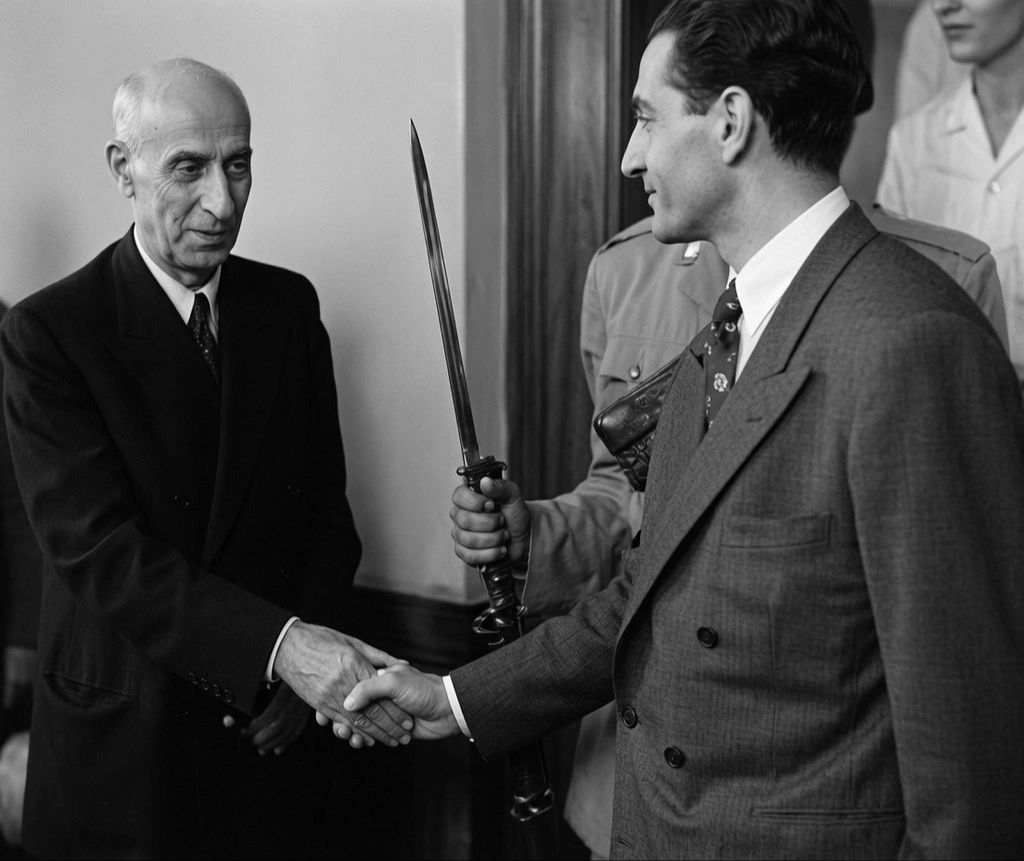
By late 1952, the United States had constructed a clear strategic objective with their foreign policy goals in Iran. Washington wanted to prevent the emersion of Soviet influence in the country while still maintaining its broader security interests in the Persian Gulf and reaching an agreed settlement over the ongoing oil dispute with Britain. However, American policy during this time held a very important difference between what officials feared could potentially happen and what their intelligence assessments had suggested was likely to occur. In November of 1952, the National Security Council’s NSC documents acknowledged that communist forces were unlikely to gain control of the Iranian government during 1953, although continued political instability could eventually place Iran at a greater risk of Soviet influence. The January 1953 National Intelligence Estimate NIE-75/1 reaffirms the threat of a communist takeover or the Tudeh Party gaining real authority over Iran was not the real immediate threat, but American officials were not responding to just a influential threat. Instead, officials had responded to the possibility that continued economic deterioration and political instability could eventually produce these threats into a likely outcome.
Under the Truman administration, Washington continued pursuing diplomatic negotiations and economic assistance as ways to maintain Iranian stability without directly removing Mossadegh from power. In cables between the British embassy in Washington with the American State Department further clarifying this in their exchanges, before introducing a solidified plan to overthrow Mossadegh. However, as those negotiations failed to produce an acceptable settlement, the willingness to consider a more aggressive alternative gradually increased under Eisenhower’s first term. The underlying American interests had not fundamentally changed between administrations. What had changed was the level of risk Washington was willing to accept in pursuing those interests. The difference between administrations was in how a potential future threat gradually turned into a justification for real covert intervention, especially when the intelligence available at the time did not establish a completed assessment that a communist takeover was truly imminent.
The diplomatic problem that Washington faced was that Britain and the United States did not approach the Iranian oil dispute with identical priorities. Both held their own strategic incentives and goals going forward with diplomacy and Iran at the time. For British officials, nationalization threatened more than the Anglo-Iranian Oil Company’s immediate revenues. Accepting terms that appeared too favorable to Iran could also weaken Britain’s broader economic positioning and potentially encourage similar challenges to its overseas concessions. Especially with a huge portion of these resources helped support Britian’s Navy and military measures as well. American policymakers, however, remained concerned that continued economic pressure on Mossadegh would deepen Iran’s current political instability and create a greater opportunity for communist influence to expand. During the Truman administration, continued search for a negotiated settlement was more important rather than Britian’s preference for Mossadegh’s removal.
By December 1952, Washington was actively pursuing an arrangement that would provide $100 million in advance payments to help restore lost Iranian oil exports. However, negotiations continued to stall over disagreements regarding the terms of compensation and actions moving forward. Mossadegh was willing to compensate Britian for its physical investments, while British demands extended towards future profits that was expected from their current concession plan. This disagreement between the two states mattered for Washington’s policymakers because of American attempts to continuously preserve Iranian stability without undermining its relationship with Britain or the broader international oil system either. American officials had recognized the consequences of prolonged instability but remained unwilling to pursue certain economic alternatives that could potentially threaten their other strategic interests. The failure of diplomacy therefore narrowed Washington’s options, although it did not create a determination that removing Mossadegh was their last resort.
By March of 1953, these diplomatic circumstances were beginning to change Washington’s approach with their current interactions towards Mossadegh’s government. During a March 4 National Security Council meeting, Eisenhower still considered providing substantial financial assistance to Iran, while CIA Director Allen Dulles acknowledged that Mossadegh would likely remain in power in the immediate future. Within a week, however, the Eisenhower administration had become considerably less willing to provide substantial financial assistance or purchase Iranian oil, especially when doing so could further strain American relations with Britain. The significance of this shift lies in Washington’s declining willingness to continue providing financial support to Mossadegh. This growing preference towards a different political outcome did not necessarily resolve the uncertainty surrounding Iran’s future. Understanding that uncertainty requires further examination as to how American intelligence actually assessed the overall stability of Mossadegh’s government and the pressures threatening its survival.
American intelligence assessments of Mossadegh’s political stability presented an even more complicated picture than the growing concerns over Iran’s economic future might have suggested. The November 1952 National Intelligence Estimate anticipated that Iran’s security forces would most likely remain loyal to the government capable of maintaining its political order. Although, the country’s finances remained a major vulnerability and the continuation of inflation was expected to increase substantially. Analysts of the intelligence community did not believe these economic pressures alone would bring down Mossadegh’s administration during 1953. A January report from the American Embassy in Tehran also recognized that Iran’s economy was functioning reasonably well. Iran still had support from their central bank loans and agricultural production was still sustainable, even though the continued loss of oil revenues would create Iran’s longer-term financial concerns. By February 27, the CIA still saw no reason to revise its earlier assessment that Mossadegh would likely remain in power throughout the year. These findings show that American intelligence had recognized serious economic vulnerabilities without specifically treating them as definitive evidence of an approaching governmental collapse, rather an ongoing issue that could potentially balloon into a further economic crisis.
However, within the assessments, the written outcome did not produce a completed agreement among the different American official perspectives. Ambassador Loy Henderson had considered the November intelligence estimate reasonable but shared concerns about Iran’s political direction, while another official at the Tehran embassy questioned whether the National Front could actually remain in power through the rest of 1953. Throughout February of 1953, these growing intelligence concerns had become a serious concern of growing disagreements between Mossadegh, the Shah, and other political opponents were actively producing large demonstrations and further divisions within the government. Embassy reporting began warning that Mossadegh’s political coalition was crumbling and that his administration could potentially collapse or align themselves individually with opposing parties. However, these warnings did not resolve the larger uncertainty between American intelligence officials over whether the government was facing an immediate breakdown or could continue operating despite the increase of its oppositions positioning within Iran’s political sphere. Political vulnerability by itself could not establish which of these opposing forces would benefit most if Mossadegh had lost his power. What made the February crisis so important and inciteful was that American officials were receiving these troubling reports about his political positioning while the CIA was actively continuing their anticipation of his survival throughout 1953. The analytical question was therefore shifting from whether Mossadegh’s government was weakening to which political forces possessed the capacity to exploit that weakness.
Among these different political forces opposing Mossadegh, the Tudeh Party remained one of the more closely monitored organizations by American and British intelligence officials. However, the circumstances of their intelligence were not simply whether the party held real political influence, but what it was actually capable of accomplishing with that influence. In January 1953, the State Department’s Office of Intelligence Research estimated that the Tudeh Party had between 20,000 and 35,000 members across Iran, with approximately 8,000 of these individuals located directly in Tehran. The same assessment estimates that as many as 2,210 members within Iran’s armed forces, although analysts remained uncertain about their ranks and positioning. More importantly, there was no direct evidence that the party possessed a substantial paramilitary organization or enough weapons to seize power through complete force. Only six of Iran’s eighty parliamentary representatives held communist ties or connections. These findings indicate that the Tudeh possessed meaningful political organization and influence, but its fundamental ability to mobilize supporters did not necessarily translate into the military or institutional authority needed to overthrow the current government.
As political tensions continued into March, American intelligence assessments began presenting different interpretations of how quickly this threat could develop. A March 1 CIA assessment warned that a communist takeover was becoming an increasing possibility. However, another CIA assessment issued on March 3 concluded that the Tudeh Party was not actually prepared to seize any real power and identified Mossadegh directly as the “chief barrier to communist control” in Iran. An assessment issued a week later also recognized that Mossadegh had rejected the party’s attempts to establish real political cooperation. These differing assessments indicate that American officials generally agreed on the potential consequences of communist expansion but disagreed over how close the Tudeh Party actually was to achieving political control. The party represented a real concern for Washington, although its capabilities remained semi-uncertain. The difference between these remarks becomes important when trying to identify exactly what policymakers weighed these competed intelligence judgements while their willingness to pursue intervention were continuing development.
The larger problem that emerges from these competing intelligence assessments was that the perception of each approach was not directly on the disagreement over Iran’s political future. It was how those assessments were being actively incorporated into Washington’s growing commitment to a covert action against the sitting government regime. Koch also raises an important issue regarding the separation of intelligence analysis and covert operations, noting that the surviving CIA records do not establish whether Roosevelt's planning division sought the involvement of independent intelligence analysts during Operation AJAX. Koch additionally acknowledged that operational secrecy required certain limitations on who could be a participant in the operational insight, but this separation also prevents analysts from fully considering how American support for Mossadegh’s political opponents might change their earlier predictions about his ability to remain in power.
The distinction of CIA records and Koch’s internal analysis matters because the CIA was simultaneously trying to anticipate Iran’s political developments while also preparing a covert operation that could effectively influence those same developments. That does not mean that Washington established or deliberately manipulated their internal intelligence to justify intervention, nor does it mean that greater cooperation would have prevented the operation anyways. However, it raises another concern about how policymakers were weighing the real uncertainty within their own intelligence assessments against their growing preferences for regime change. From this perspective, the problem was no longer simply whether Washington could accurately assess Iran’s political future. It was whether American officials could exercise the true operational control necessary to produce the political outcome that the American policymakers were beginning to pursue.
V. Authorization, Operational Planning, and the Limits of Covert Control
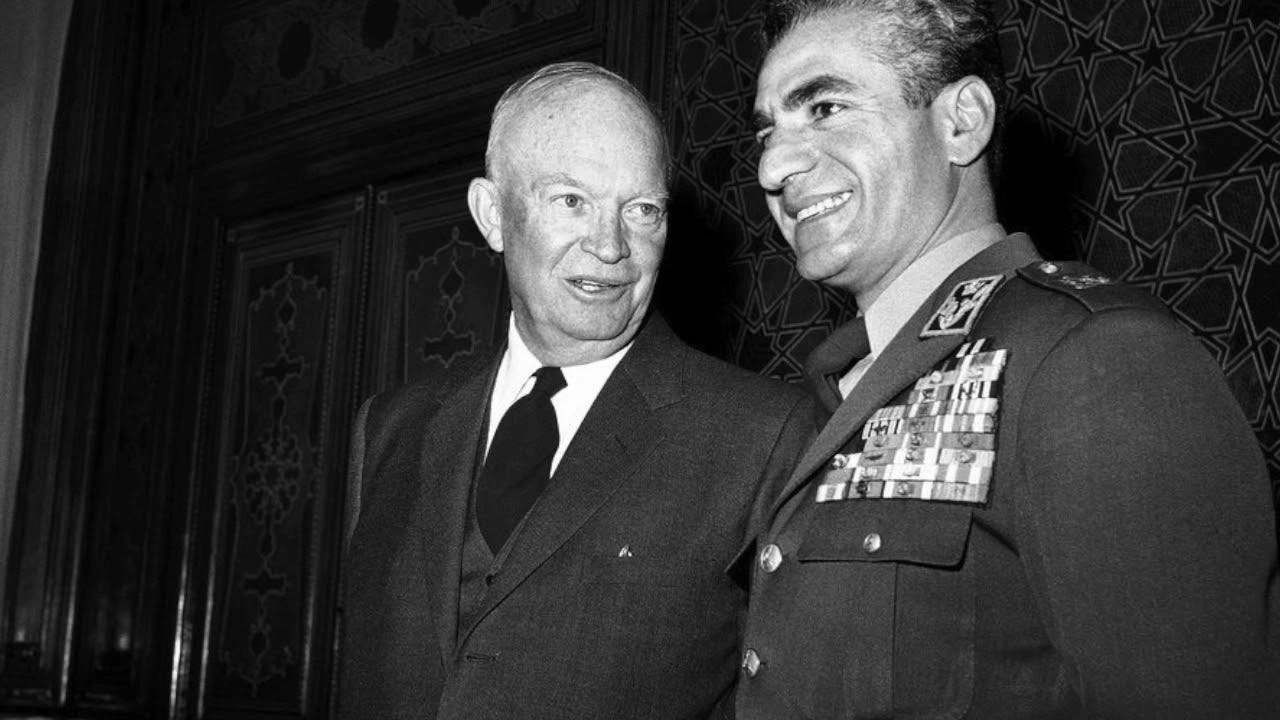
The final decision to remove Mossadegh would ultimately present Washington with another problem surrounding exactly how might the United States influence Iran’s political future without openly assuming responsibility for the consequences of intervention. Koch’s internal CIA history explains a direct assumption about how American military intervention was considered mostly impractical because of the political and logistical difficulties involved, especially with a possibility of provoking a Soviet response that could further divide Iran. Covert action, however, gave the Eisenhower administration an alternative that they could actually pursue the American strategic interest while maintaining some plausible deniability of the operation failed or was potentially leaked.
Once Washington had begun moving towards a covert intervention, the next concern was how the operation would be authorized and which intelligence officials and agencies would become responsible for carrying out the operation. During March 1953, the CIA was authorized to begin planning a coup against Mossadegh, and on April 4, approximately $1 million was sent to the Agency’s station chief in Tehran in supporting further efforts aimed at bringing about his removal. However, these initial preparations were not the same as receiving final presidential authorization. Within the CIA, responsibility for planning and implementing Operation AJAX fell directly under the Directorate of Plans and its Near East and Africa Division, headed by Kermit Roosevelt Jr. Allen Dulles also held responsibility at the Agency’s leadership level, while Frank Wisner helped support the development of covert alternatives during earlier discussions with British intelligence. Donald Wilber, a CIA consultant with extensive knowledge of Iran, became another important individual in figuring out how America would shape their operational strategy. His involvement was significant in developing the plans that American and British intelligence officials intended to carry out, although the operation itself depended on cooperation between the CIA, Britain’s MI6, and personnel responsible for coordinating activities inside Iran.
This interpretation between operational planners and political authorization became much clearer on June 25, 1953, when Roosevelt presented the proposal to senior American officials at the State Department. Among those present were secretary of State John Dulles, CIA Director Allen Dulles, and Ambassador Loy Henderson. These diplomatic officials generally supported the overall proceedings, Henderson even expressed reservations about covert operations, while Allen Dulles and former CIA Directo Walter Smith felt more strongly committed to the covert plan. Eisenhower was not present at this meeting however, Koch’s CIA history places his final approval on July 11, although no written presidential authorization has been located and the surviving records do not establish every detail of how that approval was given. Koch also notes that the CIA was not indirectly required to notify Congress of any operational actions and that its records contain no evidence of any informal briefings that may have taken place. This coordination demonstrates that senior American officials could agree on the political outcome they wanted without necessarily knowing every operational detail or how reliable their partners would perform. Washington had established who could authorize the operation and who would be directing it. Whether that authority helped translate into any actual control over the political forces inside Iran is an entirely different question.
Turning Operation AJAX into a political reality requires more than solely authorization and planning from Washington. American intelligence needed Iranian participants capable of influencing public opinion, mobilizing political opposition, and persuading military officers to act directly against Mossadegh’s government. Working through the pre-existing political networks, the CIA relied on propaganda efforts, subsidized newspaper articles, and financially supported opposing forces intended to strengthen opposition to the prime minister. Abrahamian’s research identifies several Iranian operatives who worked directly with the CIA, including Colonel Abbas Farzanegan, who helped establish these military contacts, and later, newspaper-connected agents who distributed American funding and supported the CIA’s propaganda efforts throughout Tehran. The Shah’s participation represented another major source of uncertainty because the operation depended on his willingness to dismiss Mossadegh and appoint General Fazlollah Zahedi as his successor. The Shah was initially reluctant to exercise his authority in support of the operation. Shah’s hesitation prompted the CIA to involve his sister Ashraf, including Roosevelt himself by incorporating his own personal efforts to secure his cooperation. Eventually, however, the Shah signed two royal decrees, known as firmans, dismissing Mossadegh and further appointing Zahedi. These arrangements demonstrate that American intelligence officers attempted to work through Iran’s pre-existing political institutions rather than openly replacing them through direct military intervention. However, the coordination behind all of this did not automatically establish some shift or change in control. The operation still depended on Iranian political figures accepting the risks and making decisions on their own part, that Washington could influence but not entirely dictate the overall outcome of these decisions coming into fruition.
These operational limitations became increasingly apparent during the events of August 1953. During the night of August 15-16, Colonel Nematollah Nasiri was arrested while attempting to deliver the Shah’s dismissal order to Mossadegh, and the Shah subsequently fled Iran. The collapse of the initial plan represented precisely the type of contingency for which American intelligence had prepared inadequately. Despite this being an initial operation failure, opposition activities still remained continued, and by August 19, military units and pro-Shah demonstrators had helped bring about Mossadegh’s removal. In hindsight, however, Royalist forces eventually seized Radio Tehran, while Zahedi finally emerged as the country’s prime minister. Historians nevertheless continue to debate how much of the eventual political outcome should be attributed directly to American coordination. Abrahamian places his emphasis on CIA-supported political networks, organized crowds, and military contacts, while Takeyh’s perspective on this situation gives greater weight to the Iranian political actors and their existing support for the monarchy as a stronger alternative to the operational outcome. Professor Sahar Razavi offered another perspective on this distinction as well, arguing that even though Mossadegh faced genuine domestic opposition, much of the street violence supporting his removal involved individuals financed by the United States. She also acknowledges just how difficult it is to separate the existing political opposition from the activities that American intelligence helped organize or amplify. These perspectives matter because the CIA did not necessarily have to create an opposition factor from nothing, but the opposition they had quietly supported did not automatically represent the broader political interests of the Iranian population. The more revealing question behind all of this, then, was how much control the CIA actually retained once the operation began unfolding beyond what American planners had originally anticipated.
The aftermath of the initial operations failure exposed another limitation within American intelligence planning. Koch’s internal CIA historical records indicated that officials in Washington were prepared to abandon further efforts, while Kermit Roosevelt continued working with the remaining Iranian opposition networks despite the overall uncertainty surrounding their true ability to act. Koch acknowledges that the operation lacked any sufficient contingency planning if its initial objectives were not fully achieved, leaving subsequent decision making increasingly dependent on the developments that had resided directly in Iran rather than a coordinated response from Washington’s end. Takeyh’s interpretation also complicates the methodology by further emphasizing that Iranian military officers and political opponents were also pursuing their own objectives, rather than simply following American instructions. These developments are historically significant because the operation ultimately still succeeded under circumstances that were considerably less predictable than American planners had originally anticipated. This does not in any way diminish the role of American intelligence in Mossadegh’s removal, but it raises even more questions regarding whether the outcome can be treated as evidential circumstances of reliable operational control. Washington had achieved the immediate political result it desired. The CIA could declare an operational victory in August 1953, but whether that victory actually served the American interests was a question that followed decades of debate and would make a definitive answer far more difficult to ascertain.
VI. Operational Success Versus Strategic Success
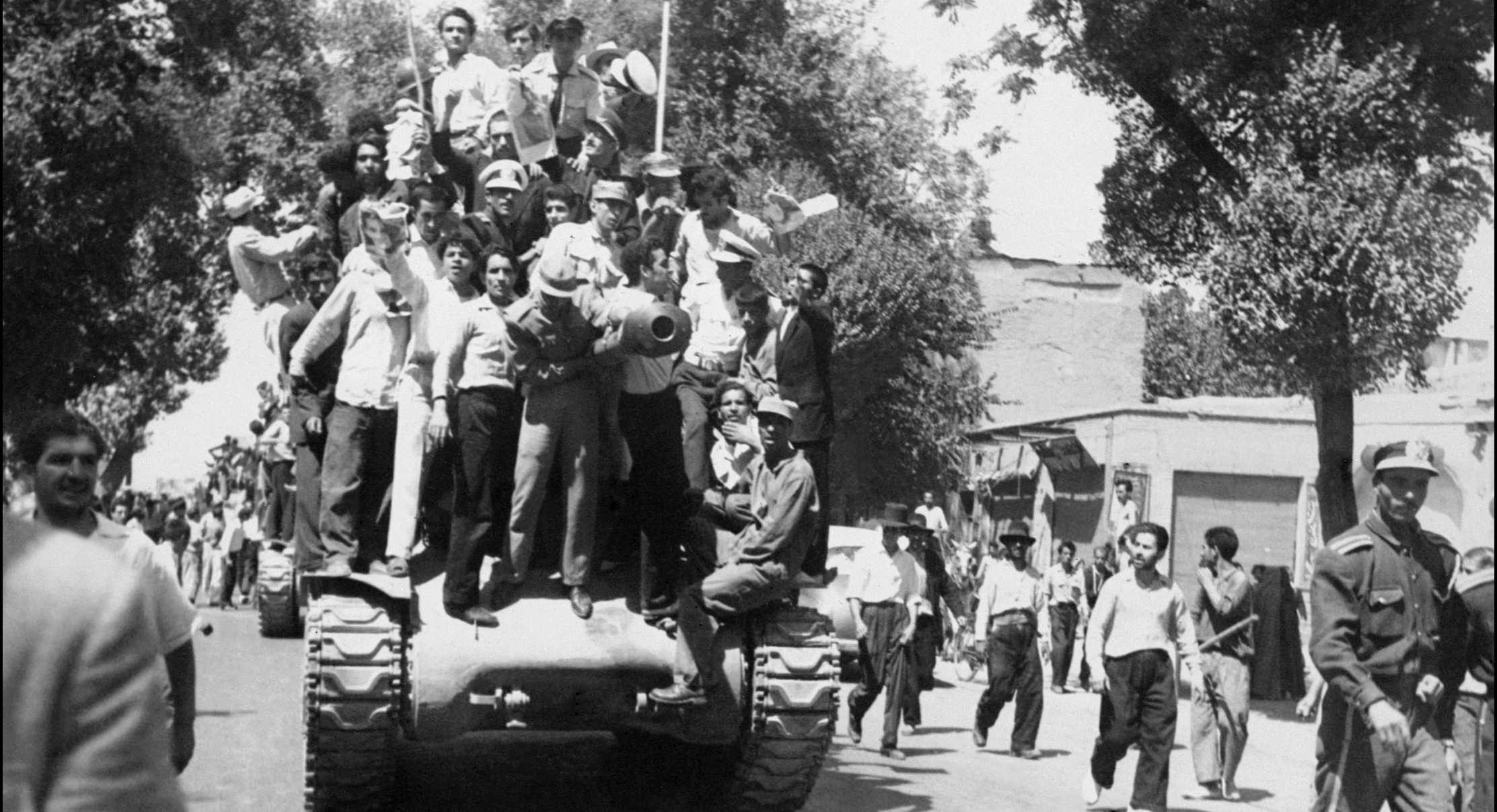
To assess the immediate success of Operation AJAX one must distinguish the underlying political objectives Washington had originally authorized versus the broader conditions it hoped would eventually follow. By the end of August 1953, the United States had finally accomplished its most direct objective; Removing Mossadegh from being the standing prime minister of Iran, General Fazlollah Zahedi would assumably control the government, and the Shah would return to Iran with his political positioning considerably strengthened. American officials also gained a government who was more receptive towards Western diplomatic and economic cooperation. Koch’s internal CIA history explains that Washington initially regarded these developments as a significant achievement, more specifically, American policymakers believed they had prevented any further instability from materializing any opportunity of communist expansion. From an operational overview or standpoint, this assessment was reasonably fitting within the overarching objectives established for Operation AJAX. The government Washington wanted removed had ultimately been replaced, and the Iranian monarchy had remained aligned with Western interests. However, there is a paradox between removing an unfavorable political leader without establishing a reliable successor had already become apparent at this point. The operation had produced a change in Iranian leadership, but the durability of that changed still remains dependent on how effectively Zahedi could fundamentally govern and whether the Shah could maintain his commitments and cooperation among Iran’s political institutions.
The economic objective of intervention requires a longer period of time to materialize. Although restoring Iranian oil revenues was an important American concern, the coup itself did not immediately settle the dispute between Britain and Iran’s nationalization of oil distribution either. Negotiations continued after the operation, and in 1954, Iran eventually reached an agreement with an international consortium of eight Western oil companies. The settlement restored oil production however, under a direct arrangement that provided Iran with half of the consortium’s net profits, while a significant operational responsibility remained with the foreign companies. This represented a meaningful improvement in Iran’s economic circumstances that Washington had feared would continue deteriorating further, but it was not an immediate accomplishment of Operation AJAX, rather a continued effort to support Iran after the fact. This American financial assistance also helped sustain the new Zahedi government while the foreign negotiations had continued into fruition. More revealingly, a December 1954 National Intelligence Estimate acknowledges that the government’s accomplishments in stabilizing a political authority and further weakening the Tudeh Party had occurred, while in doing so, simultaneously warned that the underlying sources of Iranian discontent remained unresolved.
The intelligence community itself had recognized that immediate political stabilization did not automatically establish some form of everlasting security or advancements in Iran’s infrastructural endeavors. Even Assistant Secretary of State Henry Byroade had warned in August 1953 as well, that Zahedi lacked a dependable political following and that removing Mossadegh would not fully eliminate Iran’s existing problems. Byroade’s concerns, as discussed in Koch’s analysis, extended to the possibility that Zahedi’s government could fail. He warned that such a development would “open the way to chaos and a struggle for power in which only the Tudeh organization would be likely to win,” and how the perception of Iran towards the West would go unchanged. The immediate outcome, however, was still favorable for Washington regardless of any diplomatic rhetoric that had occurred after Zahedi’s governance was implemented. Although, Washington’s strategic value behind the operation was still actively developing after 1953, 54, and so on.
The political order that begun unraveling after Operation AJAX raises a more difficult analytical question about the relationships between governmental stability and legitimizing their underlying political authority. Although Zahedi initially assumed responsibility for governing Iran, the Shah gradually consolidated his power efforts over greater control of Iran’s military and political institutions. The December 1954 National Intelligence Estimate provides an especially important perspective because American analysts openly acknowledged that the government was relying heavily on martial law, censorship, and the prosecution of political opponents to maintain its authority. This political environment increasingly resembled a highly centralized monarchy whose stability depended on coercive institutions rather than broad representative legitimacy. However, the same assessment also recognized that the United States as an increasingly visible source of financial and political support for that monarchy.
These developments presented Washington with a fundamental contradiction to their leading assessments. A government that is capable of containing communist organizations and maintaining a pro-Western orientation could potentially satisfy American security objectives while simultaneously reducing the opportunities for any representative political participation. However, the establishment of SAVAK in 1957 further reinforced a more restrictive political environment, particularly through the surveillance and suppression of opposition associated with Mossadegh’s nationalist movement that still held some political control throughout Iran. These developments demonstrate how the meaning of political stability gradually changed after the coup. Rather than reflecting a government that had developed broader public legitimacy, stability had increasingly depended on the monarchy’s capacity to prevent organized political resistance. Those arrangements could help preserve some forms of order, but they also carried out consequences for how Iranian’s viewed the United States and its relationship with the Shah.
Professor Sahar Razavi’s examination of Iranian national identity offers an important way to further understand these sets of conditions beyond conventional diplomatic measurements. In her article, “Refracted: Mohammad Mossadeq and Iranian National Identity,” Razavi explains that Mossadegh remains an enduring political symbol despite any of the attempts made by the Shah to shape opposition movements, including demonstrations against the Shah that unravel during the late 1970s. This was not simply a disagreement who governed Iran in 1953, but over the political legitimacy of a government whose restoration was associated directly with foreign intervention. In her October 12, 2026, correspondence with me, Razavi emphasized that the coup contributed to the Shah’s political insecurity and the repression that characterized much of his subsequent rule or show of power. However, she also cautions against treating the 1979 Revolution as another inevitable consequence of Operation AJAX, recognizing the importance of the Shah’s later economic and military decision making, and the competing political movements that had emerged independently. Razavi’s analysis, alongside Koch’s interpretation, also cautions against assigning the entire responsibility for the Islamic Revolution to the 1953 intervention. These distinctions are essential to maintaining an intellectually defensible assessment of the operation and its longer-term consequences. While the coup itself established the political conditions that helped shape subsequent developments, contributing to a distant crisis is conceptually distinct from being its sole and independent cause.
The disagreement surrounding Operation AJAX ultimately comes down to what American intelligence should have considered sufficient enough evidence to prove the success behind the operation. If the standard is limited to accomplishing the authorized mission, the operation succeeded. However, intelligence operations rarely exist independently of the political objectives they are directly designed to support. Koch’s and Razavi’s evaluation is pivotal in examining how an operation celebrated by American officials could later become associated with considerably far more disputed consequences. This distinction between a contemporary and retrospective assessment was not entirely separated by decades either. As early as December 1954, American intelligence recognized both the benefits of the new government and its continuing political vulnerabilities. This suggests that the problem was not necessarily an inability to identify potential consequences after intervention, but how much weight those consequences received when success would eventually be judged. On one hand, a removed prime minister, a more cooperative government, and a restored economic relationship were the observable results. On the other, political legitimacy, long-term institutional resilience, and the consequences of suppressing opposition were considerably more difficult to measure after the fact. That difficult ascertaining to the after effect of such an operation does not make these measurements any less relevant. It means that evaluating a future covert action requires more than confirming whether the immediate political outcome matches the original plan and decision-making.
A more defensible standard of covert-action success should account for three interconnected considerations: whether the operation achieved its immediate objectives, whether those accomplishments produced durable strategic advantages, and whether the resulting political consequences undermined the interests intervention was intended to protect. These standards do not have to require the assumption of American officials potentially predicting every development in Iran over the following decades. Such an expectation would be unrealistic. Especially when the political decisions of Iranian leaders and its opposition movements remained outside of Washington’s direct control or political orbit. At the same time, however, uncertainty cannot become a completed justification for ignoring the foreseeable risks of supporting a foreign government whose stability depended increasingly on repression and foreign assistance. The United States retained its significant strategic advantages through its relationship with the Shah for decades, and those benefits should not be dismissed simply because of the collapse of Iran’s monarchy in 1979. Nevertheless, the erosion of political legitimacy and the continued association of American influence with the Shah’s authority further complicates any interpretation of Operation AJAX as an unequivocal strategic victory. The evidence therefore suggests that operational effectiveness and strategic success must be evaluated separately, even when they initially appear to reinforce one another. While Operation AJAX achieved its immediate political objectives, the strength and long-term consequences of the intervention remained highly uncertain over the years. A government could be removed in a matter of days, but evaluating whether its removal genuinely enhanced American security requires the perspective of a much longer and future association of Iran’s historical timeline.
VII. Operational Compliance with Just War Theory
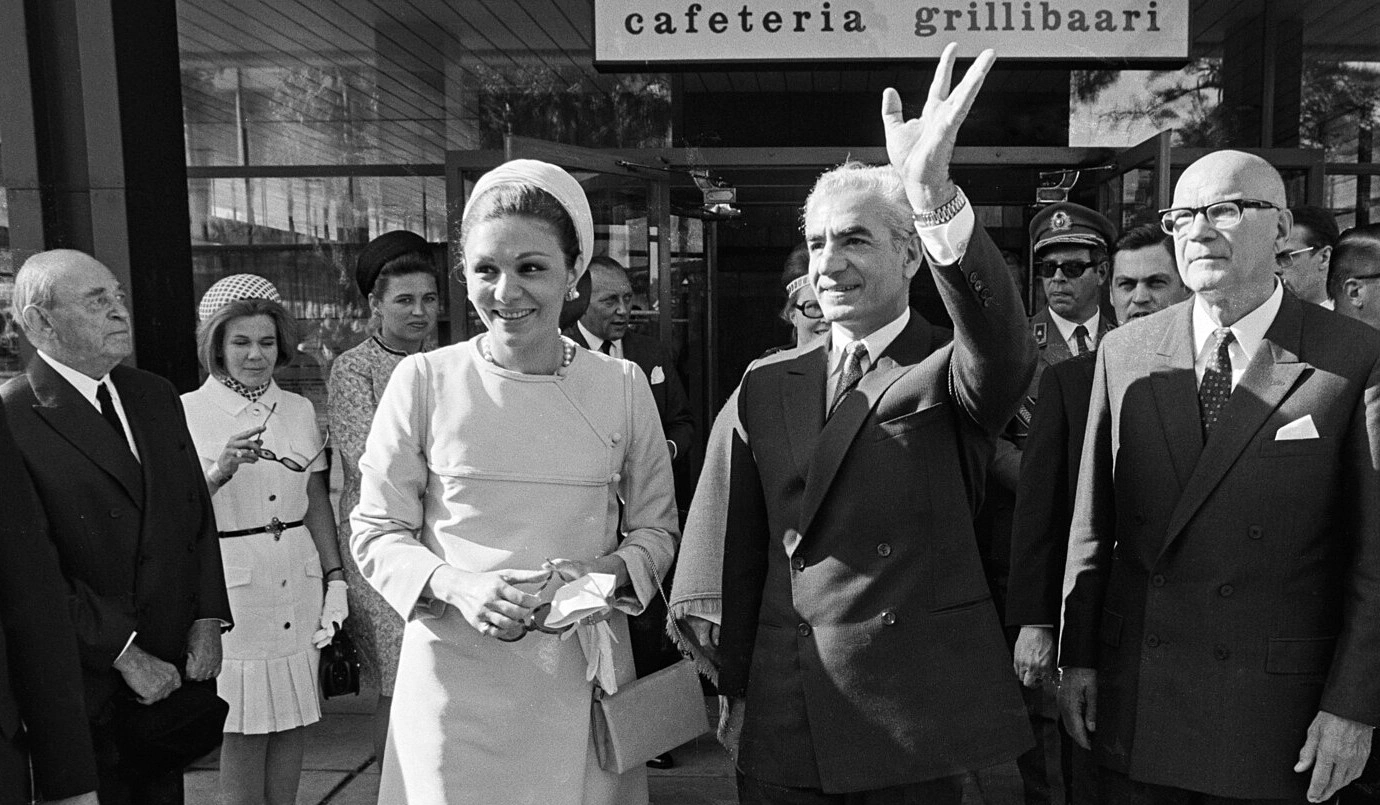
The effectiveness of Operation AJAX cannot, by itself, establish whether the intervention was ethically justifiable. Just War Theory, traditionally applied to the moral conditions surrounding armed conflict, provides another war of further assessing the decisions behind removing Mossadegh and the methods behind it used at accomplishing that overall objective. Ian Holiday argues that the principles of Just War Theory can be adapted to political intervention by further evaluating the seriousness of the underlying injustice, the authority responsible for acting, the availability of less invasive alternatives, and the continuing proportionality of any expected consequences that can rise from decision-making. Although covert regime change differs from conventional military warfare, it still involves the deliberative exercises of foreign powers over another state’s political institutions. The ethical question therefore extends beyond whether American intelligence had successfully implemented its mission. It concerns whether the conditions that justified intervention were sufficiently established before American officials accepted the risks of changing the intertwining of Iran’s government.
The principle of just cause helps to present an immediate difficulty when applied to the American justification for Operation AJAX. Washington’s concerns regarding Soviet expansion were not entirely unreasonable, more specifically, while considering Iran’s strategic location, the earlier Soviet occupations of northern Iran, and the established organizational capabilities of a possible communist government emerging along the Soviet Union’s southern border. However, recognizing a credible security concern is not necessarily equivalent to establishing sufficient justification for forcibly removing another government’s political leadership. As discussed in the intelligence assessments, the available evidence does not demonstrate a definitive answer over whether the Tudeh Party possessed the immediate capability to overthrow Mossadegh, nor did it actually establish that a continued instability would inevitably produce Soviet domination. Gasiorowski’s perspective of these assessments concluded that the communist threat had not substantially increased when the Eisenhower administration had authorized covert planning, making the operation premature as an effort to prevent any encroachment or communist takeover. From an ethical perspective, this distinction matters because a potential threat in the future is not the same as an immediate threat to national security, and both should not be treated as if they carry the same justification for military action. Just War Theory doesn't necessarily argue that governments should ignore potential dangers until it's too late to respond. However, it does make clear that any decision to intervene must be backed by a serious and credible threat, rather than simply acting on the possibility that something could become dangerous later on. Washington’s intelligence established legitimate grounds for continued concern and diplomatic engagement, but the evidence supporting the necessity of regime change was considerably less convincing to me.
Koch’s internal CIA history distinguishes that the British government’s concern for its commercial interests and international prestige from Washington’s emphasis on political instability, and the possibility of further Soviet expansion throughout the region. This does not mean that American officials were concealing their actual motivations or that preventing communist influence was simply another excuse for protecting British oil interests as well. However, they do raise questions about whether the American objectives of intervention were actually consistent with the ethical justification advanced for removing Mossadegh. This produced a fundamental contradiction: the United States sought to preserve Iran’s independence from Soviet domination while simultaneously attempting to determine the country's political leadership through covert intervention. Not whether that political orientation would last for the longer political future but rather, what was necessary for American interests in Iran at that given time. David Forsythe also mentions that an American covert intervention further complicated the issue by observing how expansive interpretations of national security would justify action against a foreign government even when direct threats to American territorial integrity or political independence was not clearly established. This distinction demonstrates that American officials did not need to fabricate their strategic concerns for that ethical justification to still remain questionable. Their concerns could be genuinely assertive while the decision to intervene still exceeded what the available intelligence had reasonably supported. Protecting American national interests is a fundamental responsibility of a government and their intentions of foreign policy, but that responsibility alone does not automatically confer a moral authority to replace another state’s leadership whenever its political future becomes uncertain or potentially aligned with an adversarial.
The principle of holding proper authority introduces another distinction between authorization of an intelligence operation and the overall legitimacy of intervening in another sovereign state. CIA records place the final approval of Operation AJAX on July 11, 1953, including a handwritten notation indicating Eisenhower’s authorization, although no physically written presidential directive has ever been recovered or released. This does not necessarily invalidate the existence of some form of executive approval, but it raises questions about the institutional accountability surrounding the decision. Congress also operated without the statutory intelligence oversight requirements that developed during the 1970s, allowing covert intervention to proceed with limited legislative scrutiny. However, an American authorization alone did not establish whether Washington possessed any real legal or ethical authority while determining Iran’s political leadership. The United Nations Charter was built around the idea that all states hold their own sovereignty and should be treated as equals within the international system. This means that one country cannot simply threaten or use military force against another to undermine its political independence. At the same time, the broader principle of nonintervention further limits how much influence or interference a foreign state can have over another country's internal political affairs. Secrecy on its own can allow a government to show face of legal compliance even when the justification for intervention still remained uncertain. Iranian constitutional authority was equally contentious in the matter as well. During a June 6, 1953, CIA planning discussion, Ambassador Henderson of Tehran considered the parliamentary procedures as necessary for what officials described as a quasi-legal replacement of Mossadegh instead of covertly. The distinction is therefore significant: executive authorization established domestic authority to conduct the operation but did not itself establish international or ethical legitimacy.
The requirement of a last resort option also presents a separate problem surrounding whether American officials had exhausted less intrusive alternatives before authorizing a complete regime change. Diplomatic negotiations had certainly become difficult, especially given Britian’s reluctance to accept an oil settlement favorable to Mossadegh. However, prolonged diplomatic frustration cannot be treated as definitive evidence that further negotiations or economic assistance were no longer viable. A March 20, 1953, National Security Council progress report still acknowledged the possibility of providing direct financial assistance to the National Front government, including a proposed $45 million contingency fund, while recommending continued efforts toward resolving the underlying oil dispute with Britain. By this point in June of 1953, Mossadegh had again appealed directly to Eisenhower for financial assistance or help Iranian oil solve their exporting issues. A State Department memorandum recorded this request, although subsequent discussions had favored withholding any immediate assistance without entirely foreclosing some form of future economic cooperation.
These alternative measures were not applicable without any real political costs either. Continued negotiations risked prolonging the economic uncertainty surrounding Iran, while additional American assistance could further undermine its relationship with Britain and potentially fail to strengthen Mossadegh’s government. These difficulties, however, are distinct from demonstrating that covert intervention had become indispensable and the strategically right call at the time. Washington’s growing preference for removing Mossadegh developed alongside continuing diplomatic alternatives rather than only after those alternatives had been conclusively exhausted. The United States had strategically been seeking additional ideas all while still trying to achieve its own strategic goals. Policymakers were not obligated to negotiate indefinitely, but an operation intended to remove another government’s leadership required a stronger demonstration that less disruptive measures could no longer produce a reasonable settlement. However, the aspiration of trying to still solve all these issues while simultaneously planning a covert option shouldn’t go unnoticed. It was not just that the intervention was considered a success, but that American policymakers also sought out other forms of achieving that similar diplomatic success, not just one over the other.
The probability of this success introduces an additional ethical concern surrounding whether American intelligence had fully established a sufficiently enough foundation for intervention before placing the finalized operation into effect. Having the operational capacity to influence a foreign government is not necessarily the same as possessing the ability to fully establish a sustainable political alternative. An April 1953 CIA assessment prepared by Donald Wilber recognizes that American intelligence assets alone could not overthrow Mossadegh by themselves and that Zahedi’s prospects depended too significantly on the Shah’s cooperation as well. The assessment even recommended reconsidering active support for Zahedi if the Shah’s commitment could not be established. This assessment was a substantial qualification, especially when the same document characterized the Shah as politically indecisive and acknowledged that American intelligence really lacked any reliable information concerning the underlying loyalties of several military commanders in Tehran. Significantly, these uncertainties were identified before the operation rather than discovered only after the initial plan failed. This creates an important ethical difficulty. Washington accepted substantial operational uncertainty despite knowing that several indispensable participants and military relationships remained unreliable.
The principle of proportionality raises a somewhat different problem as well, because, even an operation with a reasonable prospect of success must still justify any potential harm that can be associated with achieve its objectives. Wilber’s assessment anticipated that an unsuccessful attempt against Mossadegh could compromise American intelligence assets, intensify Iranian hostility towards the United States, and possibly shift Mossadegh’s government towards an opposing governmental view after the fact. This suggests that the political costs of intervention were not directly limited to the possibility of pure failure. Some of these potential failures were actively being contemplated as part of securing the intended outcome. At the same time, American officials were operating within a broader Cold War environment in which the possibility of Soviet expansion carried significant strategic consequences of its own. However, the principle of proportionality requires weighing these anticipated benefits against the foreseeable costs of intervention rather than assuming that any measure intended to preserve Western influence was inherently justified. The available evidence therefore raises serious doubts about whether Washington adequately reconciled the anticipated security advantages of intervention with the political instability and institutional damage its own planning acknowledged could follow.
Discriminating factors become more complicated when further examining a covert operation that depends on political demonstrations, organized opposition, and a military force rather than conventional warfare. Traditionally, this principle concerns the protection of civilians during armed conflicts and potential harm from external forces, but Operation AJAX raises a similar question regarding the ordinary Iranians who became exposed to such violence throughout the operation itself. Abrahamian’s reconstruction of events describes how CIA-connected operatives also partook in destructive demonstrations while presenting some of these activities of being backed by Tudeh Party. He also identifies royalist crowds, supported by military personnel, attacking newspaper offices and political organizations during the events of August 19. These actions went beyond simply persuading the Iranian public to oppose Mossadegh’s government. They created these circumstances in which political disagreement could further translate into intimidation, destruction of one’s property, and direct physical confrontation. The fighting surrounding Mossadegh’s own personal residence was especially destructive, although contemporary reports differed considerably over the number of casualties. It would be unreasonable though, to further attribute every injury or act of violence to American intelligence without any real sufficient evidence. That being said, the underlying uncertainty surrounding individual responsibility does not fully eliminate the overarching ethical concerns over an operation that actively encouraged the political confrontation in the first place. Civilians and political participants were not simply watching a change in government unfold. Rather, many were being placed directly within these consequences of a struggle that foreign intelligence had helped to intensify.
The more difficult issue concerning how much of these responsibility factors that American officials retained for the actions of Iranian networks operating beyond their immediate direction. Koch acknowledges that the CIA had helped initiate demonstrations supporting the Shah, while arguing that the crowds subsequently expanded beyond Roosevelt’s ability to control them and the directions that they were going to concur once crowds starting to rise in numbers. Both perspectives present the ethical circumstance at hand, although for different reasons. If the CIA had exercised a considerable amount of influence over these direct activities, then Washington cannot easily separate itself from the methodologies used to achieve its true objectives. If American control was in any form considerably weaker this would raise further questions regarding the decision to authorize an operation dependent on individuals whose behavior could not be reliably restrained. Undermining the structures that the CIA had put in place to ensure that this operation would not balloon into a worst situation than what Iran was already dealing with, however, human intelligence alone cannot determine the personal objectives of a mass demonstrative group either. Neither the conditions set in place, or the situation itself removes any responsibility entirely. There is also a distinction between supporting a political opposition and deliberately shaping the public perceptions through deception campaigns, particularly when those efforts could potentially promote a form of retaliation against those individuals who were not directly involved in the planning. Working through existing Iranian networks offered clear operational advantages over direct military intervention by reducing American exposure and allowing local participants to pursue objectives that overlapped with Washington’s interests. However, doing this allows reduced American exposure and allows more local participants to pursue objectives that sometimes aligned with Washington’s interests. But that strategic advantage came with an obligation to consider that people would ultimately be affected by going forward with these kinds of activities. A government cannot simultaneously benefit from the actions of covertly supported groups while disclaiming responsibility for foreseeable consequences arising from those same activities.
After examining Operation AJAX through the principles of Just War Theory, I ultimately distinguish the operation’s ethical limitations from the decision to carry it out in 1953. The United States was actively operating during a period when Soviet expansion was a genuine strategical concern, and Iran’s political instability, divided institutions, and geographical positioning gave Washington a legitimate reason to be concerned. Those circumstances weighed heavily in my assessment of the decision. While the intelligence assessments by themselves did not fully establish an immediate communist takeover, I do not believe American policymakers were necessarily obligated to wait until that possibility became a reality before considering a more decisive measure. Given these multidimensional circumstances, I believe that the CIA was correct to proceed with Operation AJAX, and I consider it an operational success. However, supporting the decision to overthrow Mossadegh does not require accepting every method used to accomplish the operation’s objectives. Presidential authorization did not automatically resolve questions surrounding Iranian sovereignty either, while the risks of political violence and institutional damage deserved greater consideration than what appears to have been given to them throughout the planning and authorization process. Holliday’s examination of proportionality in Just War Theory also reinforces this idea as to why the anticipated security benefits still needed to be weighed against the possible consequences that could derive from covert intervention.
One unresolved question is whether intelligence analysts should have been given a more direct role in reassessing the operation as circumstances shifted beyond Washington’s original expectations. Especially when Koch acknowledges that their exclusion had already weakened the analytical process during the planning and implementation of Operation AJAX. No government can reasonably predict every consequence of its actions, particularly amid rapid changing political conditions such as those present in Iran. This includes the political developments that eventually contributed to Iran’s 1979 Revolution, which I do not believe should retroactively determine whether the CIA’s decision in 1953 was justified, nor should the American decision to overthrow Mossadegh be considered as the sole catalyst behind the revolution either. However, the overall judgement is not that Operation AJAX satisfied every principle of Just War Theory, but that the intervention itself remains a defensible measure under the given circumstances that American officials were faced with, even while its methods and level of accountability remain open to legitimate criticism. It is through my first examination of a covert action like Operation AJAX demonstrates why continued debate and retrospective analysis remain essential to improving American intelligence and foreign-policy decision-making.
VIII. Conclusion
After researching Operation AJAX through the various intelligence assessments, political developments, and operational decisions surrounding the covert action that removed Mossadegh as Prime Minister of Iran, I have come to believe that the operation was ultimately an operational success for American intelligence and defensible foreign policy decision under the given circumstances of 1953. This interpretation does not align with every historical assessment, particularly those placing greater emphasis on the political developments that culminated in the 1979 Revolution. However, I don’t believe the eventual collapse of the Shah’s government should automatically invalidate the strategic decision that American policymakers had made more than two decades earlier. The United States was facing a genuine concern over Soviet expansion, and Iran’s economic instability, political divisiveness, and geographical positioning ultimately created an environment that Washington could not simply afford to disregard. What stands out to me the most throughout this research has been that the United States did not immediately turn toward overthrowing Mossadegh’s government when disagreements had first emerged. American officials spent a considerable amount of time pursuing diplomatic negotiations, financial assistance, and other political alternatives before the Eisenhower administration became interested and willing to support a covert action against the sitting regime. Those efforts matter to my assessment because American foreign policy both historically and today, should not be measured solely by the power the United States possesses, but also by its willingness to pursue diplomacy before accepting the consequences of a more aggressive course of action. This does not mean every alternative had been exhausted or that intervention carried no legitimate criticism during the situation of Iran in 1953. Still, given the uncertainty surrounding Iran’s political future and the potential consequences of expanding Soviet influence, I still believe the CIA ultimately made the correct decision to proceed with intervention. Operation AJAX accomplished the immediate political objectives that Washington had established, even under circumstances that were considerably less predictable than operational planners had originally anticipated.
At the same time, studying Operation AJAX has changed how I understand the relationship between intelligence assessments and the foreign policy decisions they are supposed to help inform. One of the most important conclusions I reached through this research is that intelligence agencies can successfully carry out an operation without possessing complete knowledge of the political environment in which they are operating. The disagreements within American intelligence, the limited involvement of independent analysis during covert operations, and the reliance on Iranian political actors whose objectives were not always consistent with Washington’s all raise important questions about how much actual control American officials possessed while implementing the approved operation. Yet, the operation succeeded regardless of these uncertainties. I do not believe that uncertainty alone should prevent a government from making a difficult decision, especially when waiting for absolute certainty could allow a potential threat to become a much greater problem from a political standpoint. However, the immense responsibility held by American officials requires policymakers to carefully consider all available intelligence, including assessments that could possibly challenge their preferred course of action. There is also an important distinction between defending the decision to intervene and dismissing the consequences that followed. Iran’s later political developments, the strengthening of the monarchy, and the criticisms surrounding American interference remain important aspects in attempting to understand Operation AJAX, but they should not become the sole standard through which the operation is judged. The greatest value I take from examining Operation AJAX is the recognition that operational success, strategic judgement, and ethical responsibility do not always produce identical conclusions. However, I still consider Operation AJAX a defensible and successful intelligence operation in the end. What I take away personally from this research is that even successful decisions deserve continued examination after the fact, because the purpose of studying covert action should not simply determine whether the United States succeeded or failed, but help to explain how intelligence and foreign-policy institutions can make better decisions when confronted with similarly difficult circumstances. I have had the benefit of examining Operation AJAX with more than seventy years of scholarship, declassified intelligence, and historical hindsight behind me. American officials in 1953 did not possess that same luxury, and there remains a meaningful distinction between having decades to question a decision and carrying the responsibility to make it in real time.
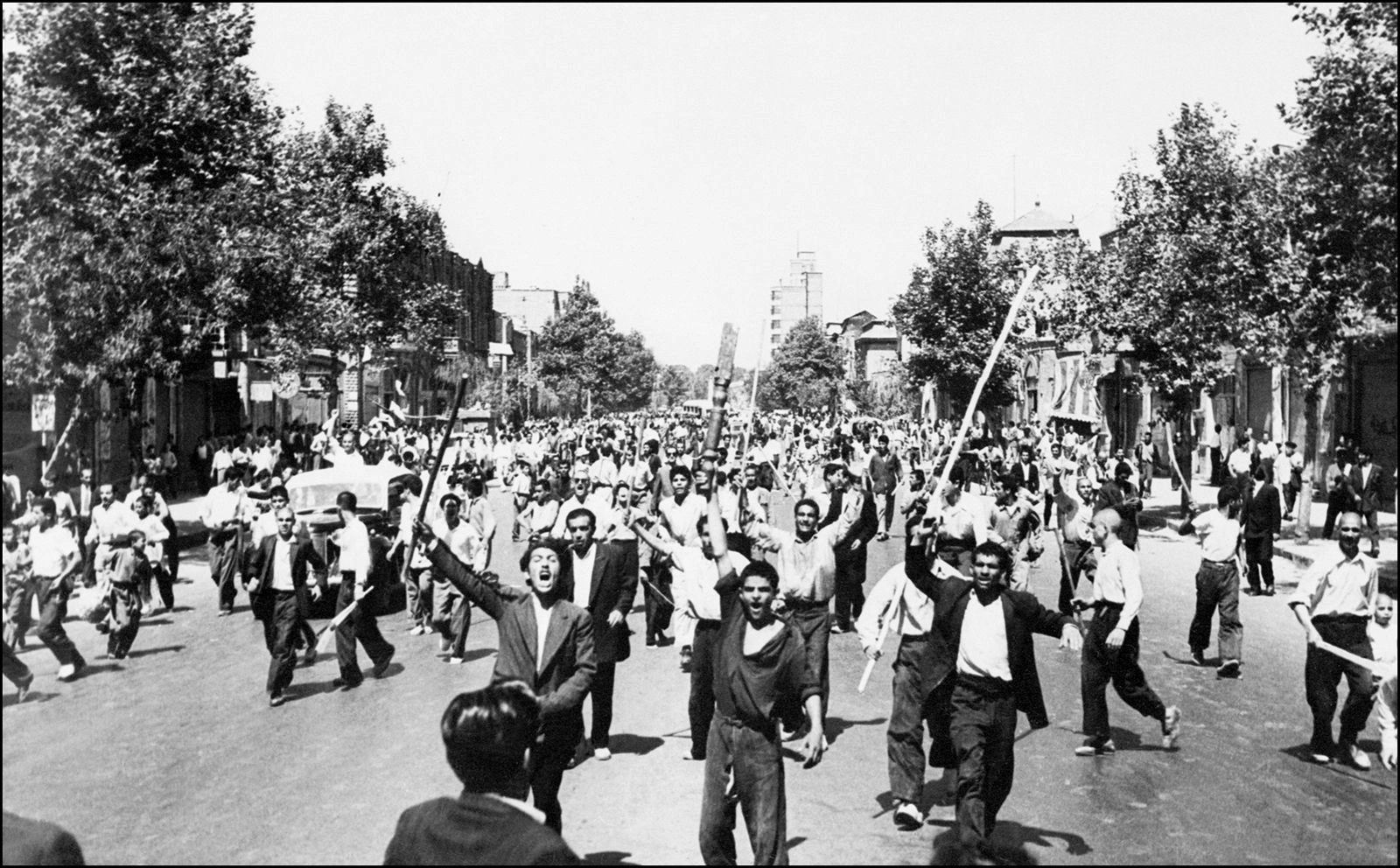
Resources & Archival References
Full PDF Version
II. Literature Review
- Communism, Cold War, and the 1953 Coup
- The Collapse Narrative: The United States, Mohammed Mossadegh, and the Coup Decision of 1953
- Oil and the US Decision to Overthrow Mosaddeq
- Proposal to Organize a Coup d’état in Iran
- U.S. Perceptions of the Communist Threat in Iran during the Mossadegh Era
- The United States, Iran and Operation ‘Ajax’: Inverting Interpretative Orthodoxy
- The Tudeh Party: Vehicle of Communism in Iran
- British Proposal to Organize a Coup d’état in Iran
- “Zendebad, Shah!”: The Central Intelligence Agency and the Fall of Iranian Prime Minister Mohammed Mossadeq, August 1953
III. Iran's Political Crisis and Indigenous Actors
IV. U.S. Policy Goals and Intelligence Construction of the Threat
- NSC 136/1: The Present Situation in Iran
- Probable Developments in Iran Through 1953 — NIE–75/1
- Proposal to Organize a Coup d’état in Iran
- Letter from the Chargé d’Affaires in Iran to Arthur Richards
- Memorandum of Discussion at the 135th Meeting of the National Security Council
- Memorandum of Discussion at the 136th Meeting of the National Security Council
- First Progress Report on Paragraph 5–a of NSC 136/1
- Developments in Iran
- The Iranian Situation
- U.S. Perceptions of the Communist Threat in Iran during the Mossadegh Era
- The Tudeh Party: Vehicle of Communism in Iran
- “Zendebad, Shah!”: The Central Intelligence Agency and the Fall of Iranian Prime Minister Mohammed Mossadeq, August 1953
V. Authorization, Operational Planning, and the Limits of Covert Control
- “Zendebad, Shah!”: The Central Intelligence Agency and the Fall of Iranian Prime Minister Mohammed Mossadeq, August 1953
- The 1953 Coup in Iran
- The Iran Coup That Never Dies
- Refracted: Mohammad Mosaddeq and Iranian National Identity
- Telegram from the Central Intelligence Agency to the Station in Iran — DIR 16224
VI. Operational Success Versus Strategic Success
- “Zendebad, Shah!”: The Central Intelligence Agency and the Fall of Iranian Prime Minister Mohammed Mossadeq, August 1953
- Oil Agreements in Iran
- Probable Developments in Iran Through 1955 — NIE 34–54
- Refracted: Mohammad Mosaddeq and Iranian National Identity
- Intellectuals and Society in Iran since 1953
- The Trajectory of the 1953 Military Coup and the Course of Liberal Islam in Iran: A Sociological Analysis
VII. Operational Compliance with Just War Theory
- Ethics of Intervention: Just War Theory and the Challenge of the 21st Century
- U.S. Perceptions of the Communist Threat in Iran during the Mossadegh Era
- “Zendebad, Shah!”: The Central Intelligence Agency and the Fall of Iranian Prime Minister Mohammed Mossadeq, August 1953
- Democracy, War, and Covert Action
- Charter of the United Nations
- Feigning Compliance: Covert Action and International Law
- First Progress Report on Paragraph 5–a of NSC 136/1
- Letter from Dr. Mosadeq to President Eisenhower
- The 1953 Coup in Iran
- Probable Developments in Iran Through 1953 — NIE–75/1